Showing posts with label country music. Show all posts

When I Call Out Your Name

LOVE HAS NO PRIDE (Linda Ronstadt) - John Boylan, Producer


Very few singers have come close to the commercial and artistic success in as many genres as Linda Ronstadt has achieved.  The combination of amazing voice and excellent taste in songwriters served her well from 1967's "Different Drum" until her forced retirement due to the effects of Parkinson's disease a few years ago.

Country, pop, folk, rock, new wave, operetta, Mexican canciones, standards, duets, trios, and so on - there seems to be nothing that Linda Ronstadt can't sing well.


"Love Has No Pride" was only a minor hit from her first gold album, coming just a year before her rise to superstardom with 1974's "Heart Like a Wheel" LP.  But the song's popularity has endured and even grown in the years since.

Ronstadt's voice breaks my heart every time I hear "Love Has No Pride."  To get an idea of just how powerful her performance is, I urge you to go on Spotify and listen to a bunch of other versions of this song.  There are many very nice versions from superb singers like Bonnie Raitt, Rod Stewart, Billy Bragg, Lynn Anderson, Paul Young and others.  But none of them hold a candle to Ronstadt's.

Another thing that stands out while listening to all of these versions is just how perfect the arrangement is on Ronstadt's.  The other records are either fairly simple (and effective) or somewhat generic.  Ronstadt's version starts with electric piano and an unusual sounding pedal steel guitar, then the drums roll in and then... The Voice.  The accompaniment and the vocal are able to build from quiet and tender passages to a powerful climax, without ever going over the top.
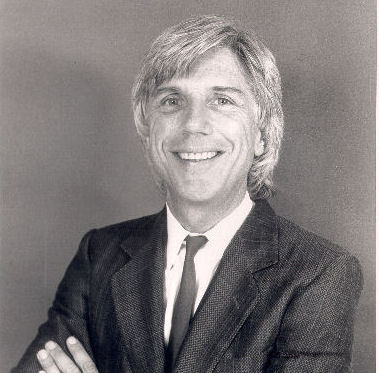


The man responsible for producing this masterpiece is John Boylan.  John also managed Ronstadt and put together a backing band that later made musical history as The Eagles.

He also co-produced Boston's self-titled debut LP, which remains the best selling first album in history.  Among others, he produced hits for the Charlie Daniels Band, the Little River Band, the Muppets, the Simpsons, various soundtracks, and is a Grammy winner.


John continues to produce, still does some work with Ronstadt, and teaches college courses in music production in southern California.  He was kind enough to respond to my questions about "Love Has No Pride."

1 - You, JD Souther and Peter Asher were all producers on the album "Love Has No Pride comes from, 1973's "Don't Cry Now." How did you end up producing this track?

John Boylan: I started the album in late ’72, but we had to stop to go on a very long tour with Neil Young. My contract with Linda ended with that tour, so I wasn’t involved with finishing the album. “Love Has No Pride,” was one of the early tracks we recorded before the tour. The song came from two friends of mine – Libby Titus, who was my classmate at Bard College in the '60s, and Eric Kaz, whose band I produced in the '60s.

2 - Bonnie Raitt had released the original version of LHNP a year earlier. What did you feel Linda could bring to the song to make it her own?

JB: I loved Bonnie’s version because she’s such an amazing singer, but her version was somewhat stripped-down and not Top 40 Radio-friendly. I thought Linda could bring her own style to the song in a more radio-friendly arrangement.

3 - You played electric piano on LHNP.  Did you lay that down separately or were at least some of the parts recorded "live" as a band?

JB: The arrangement is based around that piano part, which I worked out the night before the session. We cut it live minus the strings and background vocals. All the instruments played at the same time, and Linda sang as well, although we did touch up her vocal by overdubbing a few lines later. The string section, arranged by Jimmie Haskell, was also added later.

4 - Are there any alternate takes, or did you have a clear idea of what arrangement you were going for?

JB: No alternate takes.

5 - LHNP was only a minor hit at the time, topping out at #51, but has endured as one of the most popular songs in Linda's extensive catalog.  Why do you think this is?

JB: Two reasons – it’s a great song and Linda sang the hell out of it.

6 - Legendary pedal steel guitarist "Sneaky Pete" Kleinow contributes a lot to the sound of LHNP.  What was it like working with him?

JB: Pete was a wonderful musician, with the most original sound on steel I ever heard. Even Buddy Emmons, arguably the best steel player ever, said that Pete was a unique player. I worked with him a lot and enjoyed every session.

7 - It's fairly well known that you and Linda were a couple at one point, and I'm not sure what the status of your relationship was when you recorded LHNP.  How did that inform or influence such a heartbreaking performance?

JB: Not relevant at all. We had not been a couple for over two years when we made that record.

To read more about John, check out his music company's site here.


I'm Stuck in Folsom Prison

Robert Hilburn - Johnny Cash's "Folsom Prison Blues"


Two giants at Folsom Prison: a musician and a journalist


You may have heard today that the USPS is issuing a Johnny Cash stamp this year.  I don't mail much these days, but now I need to come up with some excuses to do so.

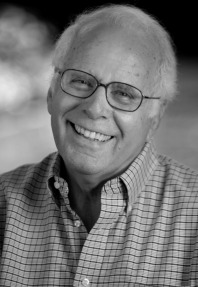
This news ties in well to the subject of this post, Cash's iconic song "Folsom Prison Blues."  I'm very pleased to have my questions about FSB answered by Robert Hilburn, one of the most influential rock critics of all time.  Hilburn, who was the LA Times' pop music editor and critic from 1970-2005, has written a new book about Cash.  The author has one impeccable credential: he was the only music writer to accompany Cash on his historic performance at Folsom Prison.

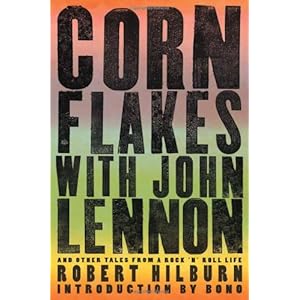
Hilburn, who is on the Rock and Roll Hall of Fame's nominating committee, wrote a musical memoir which I greatly enjoyed reading last year.  In "Corn Flakes with John Lennon," he gives intimate insights into many of the most significant artists of the rock era, from Dylan to Springsteen to Bono, Kurt Cobain to Michael Jackson.  He seemingly has a gift for for gaining musicians' trust and respect, which leads to unique access.  

Why do you think "Folsom Prison Blues" has endured as an iconic record?

Robert Hilburn: “Folsom Prison Blues” was a hit in the country field from the moment country radio started playing it. The song entered the country charts on Feb. 11, 1956 and went to No. 4 on the country charts—remaining on those charts for 20 weeks. The appeal was partly the uniqueness of the story (with the stark line about shooting a man just to watch him die), but also the absolute authority of John’s voice. It sounded real, threatening, and important—not just another generic country hit. That record stood apart from anything else on the radio. In fact, it was too threatening and raw for pop radio. It would take the more soothing “I Walk the Line” a few months later for Cash to crack the pop market.

Though a great record, “Folsom Prison Blues” would not have endured as an iconic record without the Folsom prison concert. Times had changed by the time Cash stepped on stage in 1968 at Folsom. Dylan and so many other great rock artists had created a market for bold, authentic, edgy music and Cash’s “Folsom Prison Blues” fit into that world. Though the record went to No. 1 on the country charts in the summer of 1968, it was the exposure on underground rock radio and the write-ups in general newspapers and publications (from the Los Angeles Times to the Village Voice) and rock journals (notably Rolling Stone) that helped spread the word to a wider audience—thus the record became a huge pop-rock hit. Even in that edgier world, the record stood out. People weren’t just intrigued by the record but by this guy Johnny Cash. They bought the Folsom album—and the dramatic impact of that great work—made both Cash and the song more important. Together, Cash and the record became part of the American cultural fabric.


While writing your upcoming book on Johnny Cash, what was the most interesting thing you learned about FPB that you hadn't previously known?

RH: Once I learned that John based “Folsom Prison Blues” on a Gordon Jenkins’s song titled “Crescent City Blues,” I worked hard to find out how he came across “Crescent City Blues” and I track down the person who played the Jenkins song for John in an Air Force barracks in Germany. If that serviceman hadn’t bought the Jenkins record, John, most likely, would never have heard “Crescent City Blues” (it wasn’t a hit), thus there would have been no “Folsom Prison Blues”—at least anything in near the form we know).

You were at Folsom Prison for Cash's famous performance, as recounted in your book "Cornflakes with John Lennon: And Other Tales from a Rock 'n' Roll Life." What did you think when you saw the scenes set there in the film, "Walk the Line"?

RH: They seemed generally correct.


4 - What is the truth about the connection between FPB and "Crescent City Blues"?

RH: When I first heard “Crescent City Blues” a few years ago, I was surprised how much John took from the Gordon Jenkins song. He basically uses the same structure, simply changing a few lines. Now, those changes were important. He added, for instance, the line about shooting a man in Reno just to watch him die, which was perhaps the most memorable line in the song. But he kept a lot of the original language. It is clearly a different song in Cash’s hands, but the two songs are closer than I had imagined.

What is your upcoming book (tentatively titled Johnny Cash: The Life) about?

RH: I’m trying to tell the story of John’s artistry—how it came about, the factors that encouraged the artistry and worked against the artistry. In some ways, the book is about the struggles of an artist. It’s easy to think songwriters, for instance, just sit back and write songs every so often and make an album. But there are all kinds of hurdles they must cross—including emotional turmoil in their lives, and I learned in researching the book that there was much more emotional turmoil and physical pain in John’s life than I had ever imagined.

When can we expect to see it in stores and online?

RH: The book is being published by Little, Brown and Company and it is tentatively scheduled for release in November. It will also be published in various other countries around the world.

Do you want more Hilburn?  Of course you do, so here are a few places you can find him: