Showing posts with label Bob Dylan. Show all posts

And Your Voice Like Chimes

SAD EYED LADY OF THE LOWLANDS - Emma Swift


There are two types of people: those who think Bob Dylan can't sing worth a damn and those who know that he's a fantastic vocalist. Needless to say, I am in the latter camp.

I think both camps will agree, however, that Nashvillian-by-way-of Australia Emma Swift can sing very well. She has referred to herself as the anti-Paul McCartney - able to “take a sad song and make it sadder.” Her most recent project is ambitious: an album of Bob Dylan covers, cleverly titled "Blonde on the Tracks."


"Sad Eyed Lady of the Lowlands" is perhaps the most challenging song that she covers. There are people who think that some of Dylan's lyrics (such as those in "Sad Eyed Lady") are nonsense, they're nothing more than words that sound good when strung together. Again, I strongly disagree with this take (though I think there is nothing wrong with lyrics that are pleasing to the ear and have no deeper meaning). Covering a song like Sad Eyed Lady, with its opaque phrases, is not as straightforward as singing a Dylan love song along the lines of "Make You Feel My Love," which is much more direct and - perhaps not coincidentally - notably covered by Adele, Garth Brooks, and Billy Joel.

Oh, and "Sad Eyed Lady" is a very long song, the original version on Blonde On Blonde clocking in at 11:22.


"Sad Eyed Lady" has been covered by some amazing artists: Joan Baez, Richie Havens, Steve Howe, Old Crow Medicine Show. While each version is pleasant enough, none of them have worked for me.  I never felt these singers were emotionally connected to the lyrics. Emma's version is the first one that's really resonated.

Head over to Bandcamp to hear (and/or buy) Blonde on the Tracks if you haven't already. The album has been generating tremendous buzz since its release, a tribute not only to Emma's artistry but to her hard work as an independent artist, wearing as many hats as needed to get her album produced, publicized, played, sold, shipped, and so on. 

She kindly took time to answer my questions about "Sad Eyed Lady."

1 - What is it about Sad Eyed Lady of the Lowlands that compelled you to include it on Blonde on the Tracks, when there are many hundreds of Bob Dylan songs from which to pick? 
 
EMMA SWIFT: There are hundreds of songs, but there’s only one "Sad Eyed Lady of the Lowlands." It felt right. It felt honest. It felt essential. When the world gets me down, that song is like going back to the womb. It restores me back to my factory settings. 
 
2 - This is a song dense with poetic imagery which is anything but straightforward or linear. Did you try to figure out what phrases like "The kings of Tyrus with their convict list" meant specifically to you or was it a more intuitive, open ended process of letting the words flow through you while singing? 
 
ES: Everything I do is based on intuition. I’m a Pisces rising, it’s in my astrological DNA. 
 

3 - Maybe it's not hard for you as a professional singer, but how do you get Dylan's very distinctive phrasing out of your mind and sing the words in your own voice? 
 
ES: I love Dylan’s phrasing, but I’m not a mimic. It’s not in my skill set. Some folks are extraordinarily gifted in this way, but I am quite limited. I can only really sing in my own style. So I didn’t have to work hard to get his voice out of my head, the hard work would have been trying to sound more like him. 
 
4 - This is a famously long song and your version is nearly 12 minutes long. Do you have to approach it differently vocally from a typical 3-4 minute cut to pace yourself in the studio, or was it not a concern as you could cut and paste various takes? 
 
ES: I don’t really think of Sad Eyed Lady of the Lowlands being a long song, I think of it more like a meditation or a soliloquy. I approached it the same way I approach the recording of any song I do: with tenderness, depth of feeling, vulnerability, nervousness, fear and wonder. 

Another song from "Blonde on the Tracks"
 
5 - Were you familiar with any other cover version of the song (such as Joan Baez's) and did they influence your take at all? 
 
ES: When I made the album I had to work hard to erase all knowledge of Dylan covers from my mind. There are so many, and the feeling that I might just be needlessly adding to the pile was a worry that my shadow self definitely liked to remind me of from time to time. Negative self-talk and hyper-awareness of what everyone else has done or is doing are the enemy of my creative life force and are to be avoided at all costs! 
 
6 - Did you try doing Sad Eyed Lady at any different tempos/keys/arrangements, or did you go into the recording knowing exactly how you wanted it to sound? 
 
ES: I never go into anything in life knowing exactly how it is going to turn out, I’m just not that kind of soul! Recording music is fun because a studio session can go in all kinds of directions once you’re in there and the band are bouncing off each other. We didn’t do much experimentation, we just played the song. The beauty in Sad Eyed Lady of the Lowlands had already been masterfully laid out by Dylan more than 40 years before, we just had to play it through and see what happened.  

7 - How did you decide where to place it on the album, between "Simple Twist of Fate" and "The Man in Me" as track #5? 
 
ES: It’s the centrepiece of the record, so I put it in the middle. I wanted it to be unavoidable. Something to unclog the arteries and the tear ducts.

Emma is a great Twitter follow. Also find her at YouTube, Patreon, Instagram, Facebook and emmaswift.com

No one knew the circumstance but they say it happened pretty quick

LILY, ROSEMARY AND THE JACK OF HEARTS (Bob Dylan) -- Gregg Inhofer


"Blood on the Tracks" is one of the most acclaimed albums in rock history.  Bob Dylan's 1975 masterpiece is also one of his most commercially successful records, topping the charts and going double platinum.  BOTT was inducted into the Grammy Hall of Fame in 2015.

Gregg Inhofer plays keyboards on five of the ten tracks, but you won't find his name on any release of the album.  The same holds for the four other Minneapolis musicians who also backed Dylan on those songs. Guitarist Kevin Odegard co-wrote a fascinating book about the experience.


The short version: Dylan had recorded the ten songs for BOTT in New York City and the album was set for a release in time for Christmas, 1974.  But Dylan wasn't satisfied, so his brother suggested that he re-record some songs while in Minnesota for the holidays and delay the release. 

Backing musicians were quickly rounded up and, after two days of recording, produced the final versions of "Tangled Up in Blue," "You're a Big Girl Now," "Idiot Wind," "If You See Her, Say Hello," and the song I cover in my Q+A with Gregg Inhofer, "Lily, Rosemary and the Jack of Hearts."

Since the record jackets had been already been printed, it was too late to add the Minneapolis musicians to the credits, something which has never been rectified. 

"Lily, Rosemary and the Jack of Hearts" is a long title for a very long song.  It is cinematic in scope, telling the tale of a love triangle in the Old West in 15 verses. The characters and setting are so vividly depicted that, unsurprisingly, there have been two screenplays based on LR&TJOH (neither has been produced).

The musical setting for this complex story is relatively simple, an uptempo folk song propelled by the talented Minneapolis musicians, including Inhofer on organ.

To hear what they added to the song, listen to the rejected New York version, done in a slower and stripped down style and then listen to the Minneapolis version, the one used on BOTT:


Dylan has only played LR&TKOJ live once, back in 1976. 

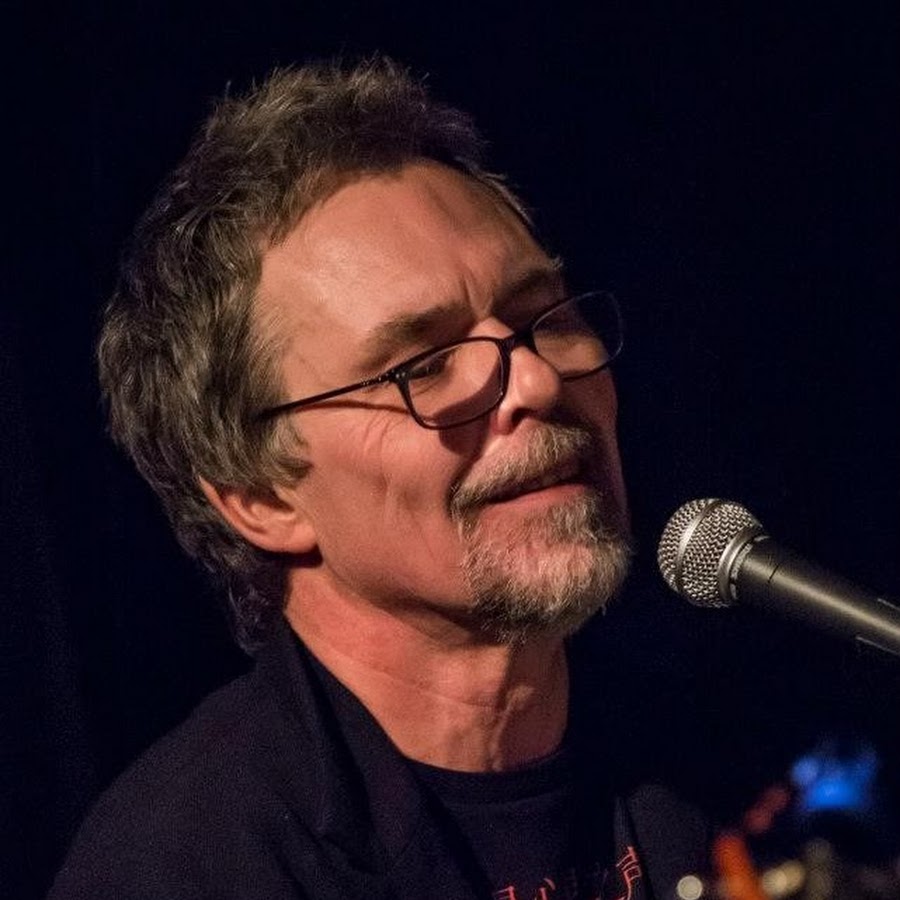
Gregg Inhofer is an accomplished musician, a member of the Minnesota Rock and Country Hall of Fame, a singer-songwriter and pianist whose work ranges from jazz to rock to R&B. He recently fielded my seven questions about his experience working on BOTT.


1 - What was your connection to Kevin Odegard at the time and thus to these sessions?

Gregg Inhofer
: At the time, I was working in Kevin’s band doing his originals. Kevin’s manager was David Zimmerman, Bob’s brother. When the whole session thing came up, it was decided to use the studio rhythm section which was Billy Peterson & Bill Berg. When the subject of a keyboard player came up, I was the first name on their minds since I worked with Kevin.

2 - How well did you know any of Dylan's previous repertoire?

GI: I wasn't that well versed in Dylan’s work. I was aware of the mainstream stuff & had deep respect for him as a lyricist & the voice of a generation. I would hear whole albums at parties but I never bought one.

3 - In your band at the time, This Oneness, you were one of the vocalists. Did you learn anything about singing from observing Dylan during these sessions?


GI: Yes, I was also working with This Oneness. No, I didn't learn any vocal tips from him during the sessions. He didn't care that much about vocals. It was the words. 

Funny though, years later when we did the Pantages show, I had to sing a couple songs from BOTT. In learning his vocals I thought, oh I see what he was maybe going to go for if he gave a shit….but he didn't really.


4- Did Dylan give you any direction or feedback on your organ part for Lily, Rosemary and the Jack of Hearts? You had been playing progressive rock/jazz fusion with This Oneness. Was it challenging to adapt to playing a three-chord song with a very straightforward time signature?


GI: He did not give any feedback for this song. I found the 3 chords rather boring but not in a disrespectful way. I amused myself by turning the Leslie on and off.

5 - I've read how the musicians on "Sad Eyed Lady of the Lowlands" were tired after a long night of recording when they started taping that song -- and they kept thinking it was building to an end but verse after verse kept coming. On LR&TJOH did you have any idea what the song was about or how long it was going to be?


GI: We had no idea. It just kept going and going. I learned one of my most important lessons from this song though. 

We were listening to playback & I was watching Bill Berg. He was over by the speaker talking with Bob. It was a simple train beat but Bill was explaining that he could play it Doopa dappa Doopa dapper Doopa dapper Doopa dapper or dappa dooba dapper dooba dapper dooba dapper dooba. 

Now, he was a well versed jazz drummer & what I saw was Bill as a giant reservoir of talent with a little spigot on the end. Bill was giving that spigot to Bob to open or close as he saw fit. It was a moment for me. It changed how I approached the song the next time we recorded it & subsequently the rest of the sessions & all sessions the rest of my life. My philosophy became, I’d rather have someone say, "wow, what a great session" than "what a crappy session but listen to that keyboard player."

6 - In 2004, you and the other Minneapolis musicians who played on BOTT performed all the songs from the album at the Pantages Theatre in Minneapolis. What was that experience like?


GI: I said a little about it earlier. It was a great time. Eric Weissberg from Deliverance was there. A great guy. 

I said to him, Eric, there’s a question I've been wanting to ask you for 20 years. He said, why didn't you call me? Because I didn't have your number. There were a number of expletives thrown from both sides. 

It was an honor to play with all the people there. One of my top ten musical moments.


7 - Notoriously, you and the rest of the Minneapolis musicians were not credited on the record, never received gold records, etc., just union scale. In 2002, you wondered “what might have happened if we got credit?" Has anything changed in the years since you said that?

GI: Oh, I try to take a pragmatic approach. All roads lead to now & I’m quite content with my life now. I still think about suing Sony, they bought Columbia, just to give myself some closure. 

Yeah, if we had gotten credit it could have changed my whole career. I have to take responsibility for not speaking up when the second pressing came out & we weren't on it as promised. Shoulda woulda coulda.

If you'd like to hear more about Gregg's musical career, you can watch him here: 

Though the Road Buckles Under

 STAY WITH ME - Jerome Moross (1913-1983)


"Stay with Me" has been in the news lately. No, I don't mean the song by Sam Smith that inadvertently rips off Tom Petty's "Won't Back Down," but the song of the same title that Bob Dylan sings on his new album, "Shadows in the Night."  This "Stay with Me" was also released as a single and Dylan closed many of his concerts last year with it.  

When the most important songwriter of the last fifty years puts out an album of standards, the songs he selects receive a rarified stamp of approval. While some of the tracks on "Shadows" are quite well known (Irving Berlin's "What'll I Do" and Rodgers and Hammerstein's "Some Enchanted Evening"), others are underappreciated gems. 

"Stay with Me" falls into the latter category.  A spiritual song that's less about religion and more about human hope and fear, it brings to mind "You'll Never Walk Alone" and "Lucky Old Sun," standards which Johnny Cash sang on his American Recording series. 

Like Cash's covers, Dylan's version of "Stay with Me" is stripped down to an elegant arrangement, sans any orchestration, and makes evocative use of the miles on the singer's voice.  Seldom has Dylan sounded so appealingly vulnerable.

So where did this song come from?  Like all the other songs on "Shadows in the Night," it was sung by Frank Sinatra.  In June, 1965, a month before Dylan's "Like a Rolling Stone" turned pop music on its ear, Sinatra released an album that included "Stay with Me," which he had recorded as the theme song for "The Cardinal" in 1963.
 
"The Cardinal," directed by Otto Preminger, was awarded the Golden Globe for Best Picture. It tells the story of an American priest who overcomes various crises as he rises in the Church hierarchy.  

The film features an outstanding score by Jerome Moss, who also composed the music for the theme song; the song's lyrics were written by Carolyn Leigh ("Witchcraft," "The Best is Yet to Come").
 
 
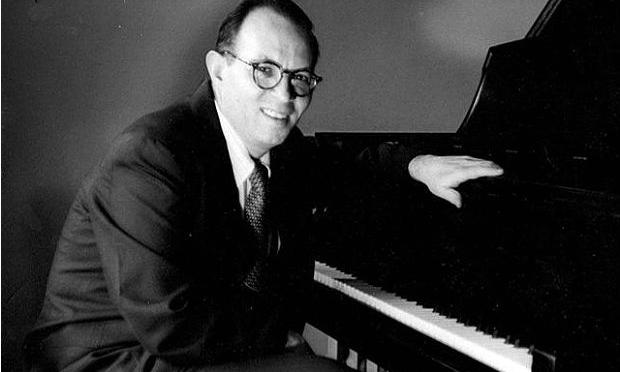
Moross, an accomplished composer, is best known for his scores for "The Big Country" and "Wagon Train," but he was also an innovator who wrote for Broadway and classical ensembles.   

Moross's daughter, Susanna Moross Tarjan, put together a fantastic site for her father's centennial.  She took the time to answer my questions about "Stay with Me" and I'm happy to share her thoughts with you.

1 - What did your father think of rock singers/songwriters like Bob Dylan?
 
Susanna Moross Tarjan:  I have no idea what my father thought about Bob Dylan, or even if he did.  Remember, he died in 1983 and had been quite sick for some time.  I'm not sure how aware he was of all that.  However, he did not like "Rock and Roll."  He also didn't like Moog synthesizers, which were popular at that time.  I think he'd be amazed at what synthesizers sound like today, and MP3.  He didn't even know about CDs, which changed everything for me as far as getting his music "out there."
 
2 - What do you think of Dylan's version of "Stay with Me"?
 
SMT:  I find Dylan's version of "Stay With Me" very moving.  The song clearly arouses some spiritual feelings in him which he conveys.  I think it has a different quality than any other song on the album.


3 - As far as I can tell, "Stay with Me" is the only song your father wrote with Songwriting Hall of Fame lyricist Carolyn Leigh. What do you know about that collaboration?

SMT:  I don't know how that came about.  I would guess that it came via the film company.  The recording came about because Frank Sinatra was a friend of hers and she asked him to do it as a favor to her.  I'm so glad he did.  It's such a beautiful recording.  For people who haven't heard it, it's on YouTube.


4 - "The Cardinal" was unusual in that your father, who composed the score for the film in addition to co-writing the theme song, went on location with the production from start to finish.  Was "Stay With Me" part of that journey?
 
SMT:  "Stay With Me" came after the film and score were done.  It was unusual for the composer to go along with the production company.  My father acted as the traveling music department.  But he loved it.  He had a lot of interesting experiences, including trying to find "Horst-Wessel" songs in Vienna that he needed for a Nazi marching scene.  Of course no one had ever heard of them but finally his driver helped him.  He and my mother had a great expenses paid trip to Europe and she had never been before.  This was long before the days of deregulation and cheap fares.


5 - Did your father ever play "Stay with Me," or sing it at home, or talk about it in his later years, or was it simply one of many things he composed before moving on to other projects?
 
(see answer to #6)
 
6 - What did your father think of Frank Sinatra's original version of "Stay with Me"?
 
SMT:  I wasn't living at home then so I don't know how often he played it.  He certainly liked the song and I know he loved Frank Sinatra's version.  However, like with other works, he moved on to other projects.
 
Susanna and Jerome Moss @ 1944
 
7 - Your father wrote ballets, a symphony, film scores, Broadway musicals and more. Much of his work is longer form and instrumental. Is there anything in "Stay with Me" that you feel is reflective of his work as a whole or is it atypical?
 
SMT:  "Stay With Me" is reflective of his work in that it is a beautiful melody.  He never gave up writing tonal music even though it wasn't in fashion during his prime years.  He believed there was always another tune to be written.


I'm Shouting All About Love

All Those Years Ago - George Harrison (Al Kooper on keyboards)

Hit the "play" button in your mind and listen to "All Those Years Ago," George Harrison's 1981 tribute to John Lennon. As with songs, the vocals are most prominent in memory. Then what do you hear? Probably George's unique slide guitar. Next? That great keyboard part. Who's playing it? Al Kooper.


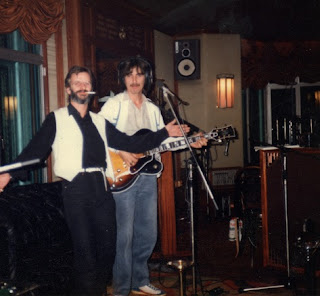
George, Ringo, Barbara Bach, Al Kooper
Photo © Al Kooper


Now, the people I've interviewed for this blog have all been very kind and each one is an accomplished and talented musician. But Al Kooper is a whole other level. Initially I was going to list his career highlights, but it was way too long. Then I pared it down to the highlights of his highlights and it was still a bit long. So I cut it down once more to produce what appears below.

Besides his work on a song featuring three Beatles, he also:
  • Played the fantastic organ part on one of the milestone songs in pop music history, Bob Dylan's "Like a Rolling Stone." The story of how this came to be is a great one; he recounts it memorably in Martin Scorsese's documentary "No Direction Home." Kooper also played with Dylan at the infamous 1965 Newport Folk Festival. 
  • Speaking of stones that roll, Kooper played the piano, organ and french horn on another 1960s masterpiece, "You Can't Always Get What You Want." 
  • He founded the innovative jazz rock band Blood Sweat & Tears - only to be kicked out by the other members, who wanted to pursue Top 40 hits (which they accomplished). 
  • At age 21, co-wrote the #1 pop hit "This Diamond Ring" by Gary Lewis & the Playboys. 
  • He discovered Lynyrd Skynyrd, signed them to his Sounds of the South label, and produced their first three albums (which included "Free Bird" and "Sweet Home Alabama.") 
  • Wrote the book Backstage Passes & Backstabbing Bastards: Memoirs of a Rock 'N' Roll Survivor and played in the Rock Bottom Remainders with other authors (Stephen King, Amy Tan, Matt Groenig, Dave Barry, etc.). 
  • Was a faculty member at Berklee College of Music in Boston. 
  • Released a dozen solo albums and landmark LPs with Mike Bloomfield and Stephen Stills. He sings, plays keyboards, guitar and more. 
  • Scored Michael Mann's Crime Story series, among other film and television work. 
And so on and so forth. Google him for more details. A personal favorite of mine is his production of the live Joe Ely EP, "Texas Special."

I am happy to report that Al cheerfully answered seven questions about "All Those Years Ago."

George Harrison is recording a heartfelt song about John Lennon not long after John's murder. He thinks, I need to have these guys perform on it: Paul, Ringo... and Al Kooper? Pretty elite company. How did the gig come about?

Al Kooper: I was living in London. I was best friends with bassist Herbie Flowers who I worshipped as a musician at the time. I played with him as often as I could. He got called for the Harrison sessions and suggested George hire me as well. George didn't know I lived there and was a large Dylan fan so I got the job. 

We were recording an entire album, plus some tracks for Ringo's album that George was producing. We cut a version of ATYA before John died, but it had an alternate lyric. John died while we were naking the album. George rewrote the lyric and recorded a new vocal to the track we had already cut.

And then had Paul, Linda and Denny Laine come in and add backing vocals. George supposedly wrote the song for Ringo to sing - this was before John died, so it had different lyrics - but Ringo wasn't keen on it. Did you ever hear the original version?


Photos © Al Kooper


AK: I think that is not so. I don't think it was for Ringo's album, but rather George's. But it did have another lyric based on the title. 

Your part is very prominent in the mix. Did George give you much direction or did he leave it up to you to create what you felt was right?

AK: All the tracks we cut were just jammed. We were all experienced studio players and that's the way we played. George sang live so I knew where to play fills.

Did you record any alternate versions or just the take we all know?

AK: We played it until George thought we had a good take.


Photo © Al Kooper

You recorded this at Friar Park, George's home. What was that like? 

AK: It was very comfortable and it was great to see his guitar collection.

Did you know Lennon?

AK: I did know Lennon. Mostly when we both lived in LA. A bunch of us used to record and hangout at The Record Plant studios.

When I was producing (Lynyrd) Skynyrd's second album, John came in during a session to ask me something. He stayed for two minutes then discretely left.

The band were all out in the studio. Lennon had come into the control room.

When he left Ronnie Van Zant said: Was that John Lennon who just came in?"

I said "Yeah."

Ronnie said " We have to take a break for a few minutes." It blew their southern minds!

How do feel the song holds up since it was recorded all those years ago, pun intended?

AK: a) I have never been so loud in a mix on someone else's record
b) I am very proud of what I played on the fly
c) It was a #1 record in Billboard
d) For me, it holds up great