Showing posts with label Minneapolis. Show all posts

Somewhere Angels in Heaven are Crying

RAIN ON ME - The Clams

The Village Voice's influential Pazz & Jop was an annual poll of music critics compiled by Robert Christgau.  In the 1984 edition, three acts from the Twin Cities appeared in the top ten:

Minneapolis music was at its commercial and critical peak. 1985 saw the debut of The Clams, a hard rocking band inspired by the likes of the Rolling Stones and the New York Dolls. Singer/guitarist Cindy Lawson's ad in a couple of alt-weeklies looking for women who wanted to play bluesy rock caught the attention of lead guitarist Roxie Terry, bass player Patsy Joe, and drummer Karen Gratz.  Soon, they were playing at the Uptown Bar, 7th St Entry, and other popular local venues.

While The Clams didn't go on to major commercial success, they were a popular live act. They released an LP in 1988, "Exile on Lake Street" - five years before Liz Phair's seminal "Exile in Guyville" album and 16 years before the band Lake Street Dive named itself after the same Minneapolis street.


Their most memorable live show took place not in a dive bar or rock club, but in prison.  Located 25 miles east of Minneapolis, the state correctional facility in Stillwater opened in 1914 and is listed on the National Register of Historic Places.  In 1987, The Clams put on a concert there for the inmates. 

Before you read the interview with Cindy Lawson below, head on over to Vimeo (Rain on Me - The Clams) where you can see the band perform a number of songs at the prison.

The Clams at Stillwater Prison

1 - How did The Clams end up playing a gig at Stillwater prison and - since we don't get to see the audience in the video - what was the atmosphere like?

Cindy Lawson - I don't know if they still do this, but back then the inmates would do a 'carnival' annually in the summer to raise money for Muscular Dystrophy. Bands played inside an auditorium, then in the courtyard they had a dunk tank (which of course we went in!) and food trucks. 

I believe we learned about this gig from a band we knew, Big Mambo, whose drummer was Tom Cook. We went in a week or two before to do a video interview with the two gents who were in charge of the bands. I think I have a copy of that somewhere-we were unbelievably silly (as we always were) so I look back and appreciate their patience with us!

The audience (the inmates) were extremely well behaved. There wasn't any shouting or dancing-so unlike a bar gig! They were very appreciative and applauded like crazy after each song and then quieted down. I'm sure there was a mandate set forth that in order for them to have fun privileges like bands and carnivals they needed to be on their best behavior. We never felt scared or worried about any of it. None of them really came up afterwards to talk to us-the only ones we communicated with (besides the prison personnel) were the two inmates I mentioned before.

Inside Stillwater Prison

2 - Did your mom really tell you, "When skies are cloudy, somewhere angels in heaven are crying?" 

CL - Yes, I think that was one of hers. Along with "Don't eat raisins in the dark." 😁 But she never said "Powder your nose and kick some ass" that I attributed to her on our EP. That one's mine. 🤓

3 - Your intro quotes the Blues Brothers line, "We like both kinds of music, country and western."  You also performed Johnny Cash's Folsom Prison Blues" (appropriately) at this show.  Did you listen to much country music at the time or was this simply a Stones inspired bluesy song?

CL - We listened to real country-Loretta Lynn, Patsy Cline, Dolly Parton, Johnny Cash. That music is universal. 


4 - Do you still have that guitar?  Or the Rickenbacker (which I like a lot) that you also played at this concert? 

CL - I don't have the Squier anymore. My first boyfriend (and all-time best friend, Nic Santiago) gave it to me as a birthday present. The Rickenbacker sadly disappeared at some point during the '90s. I tried to find it but never could. I have a hunch who the thief was, but could never prove it, and if he really wanted a guitar that bad, so be it. I only hope he played it and didn't sell it for drugs.

5 - Have you ever run into an ex-con who said," I remember you from that show when I was in the Big House," so to speak?

CL - I haven't, but I remember one of the two inmates who were in contact with us contacted Roxie when he got out just to say hello. And someone from the prison sent her a special leather belt they had made. She had a lot of fans! 

Minnesota Correctional Facility - Stillwater

6 - You say in the clip that you and Roxie just wrote "Rain on Me."  Was one of you more the lyricist and the other more the music, or was it 50/50 in all respects?

CL - She definitely wrote the music and I wrote the words. I didn't start writing melodies on guitar until later. 

7 - Any other thoughts or feelings that seeing this clip now evokes?

CL - Well, thank you so much! This is delightful! I miss those ladies and I certainly miss that time in my life. I still see Karen and Patty (who lives in Lake Tahoe) often. We were so young and had so much fun. It's sad that one never appreciates the time they are in until it's long gone. And we certainly didn't archive things very well. I have no idea how some of our videos end up on the web and then are mysteriously taken down.  

No one knew the circumstance but they say it happened pretty quick

LILY, ROSEMARY AND THE JACK OF HEARTS (Bob Dylan) -- Gregg Inhofer


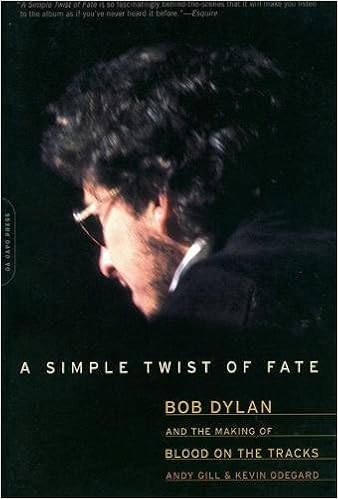
"Blood on the Tracks" is one of the most acclaimed albums in rock history.  Bob Dylan's 1975 masterpiece is also one of his most commercially successful records, topping the charts and going double platinum.  BOTT was inducted into the Grammy Hall of Fame in 2015.

Gregg Inhofer plays keyboards on five of the ten tracks, but you won't find his name on any release of the album.  The same holds for the four other Minneapolis musicians who also backed Dylan on those songs. Guitarist Kevin Odegard co-wrote a fascinating book about the experience.


The short version: Dylan had recorded the ten songs for BOTT in New York City and the album was set for a release in time for Christmas, 1974.  But Dylan wasn't satisfied, so his brother suggested that he re-record some songs while in Minnesota for the holidays and delay the release. 

Backing musicians were quickly rounded up and, after two days of recording, produced the final versions of "Tangled Up in Blue," "You're a Big Girl Now," "Idiot Wind," "If You See Her, Say Hello," and the song I cover in my Q+A with Gregg Inhofer, "Lily, Rosemary and the Jack of Hearts."

Since the record jackets had been already been printed, it was too late to add the Minneapolis musicians to the credits, something which has never been rectified. 

"Lily, Rosemary and the Jack of Hearts" is a long title for a very long song.  It is cinematic in scope, telling the tale of a love triangle in the Old West in 15 verses. The characters and setting are so vividly depicted that, unsurprisingly, there have been two screenplays based on LR&TJOH (neither has been produced).

The musical setting for this complex story is relatively simple, an uptempo folk song propelled by the talented Minneapolis musicians, including Inhofer on organ.

To hear what they added to the song, listen to the rejected New York version, done in a slower and stripped down style and then listen to the Minneapolis version, the one used on BOTT:


Dylan has only played LR&TKOJ live once, back in 1976. 

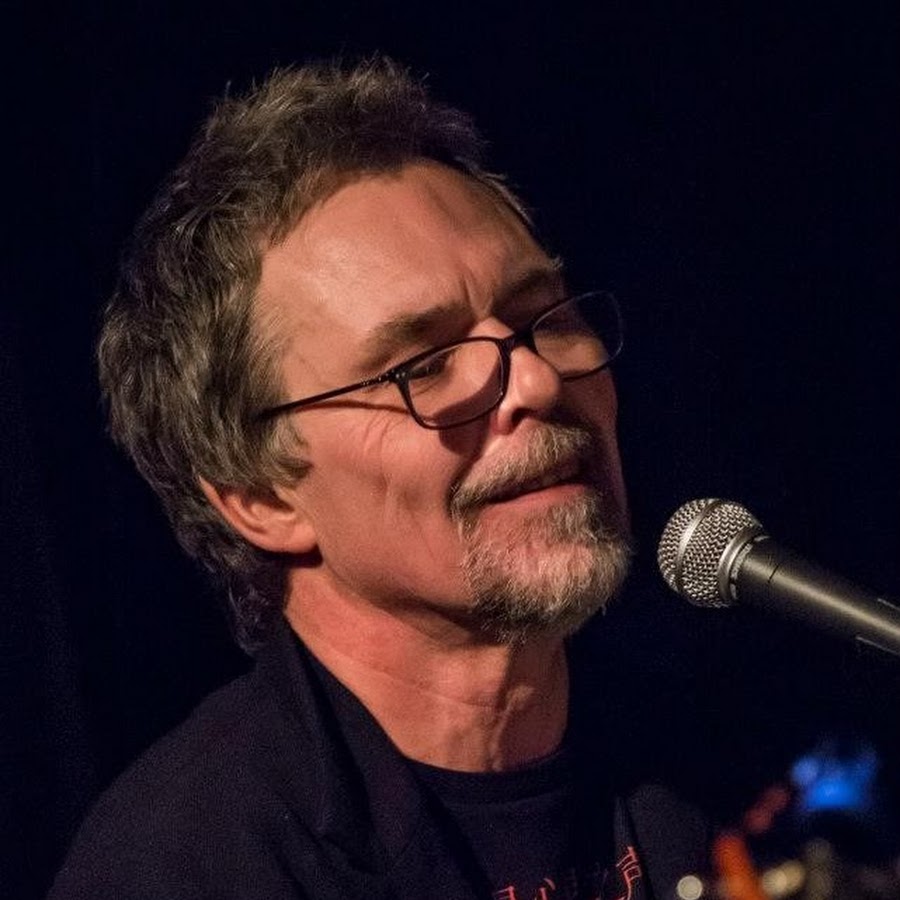
Gregg Inhofer is an accomplished musician, a member of the Minnesota Rock and Country Hall of Fame, a singer-songwriter and pianist whose work ranges from jazz to rock to R&B. He recently fielded my seven questions about his experience working on BOTT.


1 - What was your connection to Kevin Odegard at the time and thus to these sessions?

Gregg Inhofer
: At the time, I was working in Kevin’s band doing his originals. Kevin’s manager was David Zimmerman, Bob’s brother. When the whole session thing came up, it was decided to use the studio rhythm section which was Billy Peterson & Bill Berg. When the subject of a keyboard player came up, I was the first name on their minds since I worked with Kevin.

2 - How well did you know any of Dylan's previous repertoire?

GI: I wasn't that well versed in Dylan’s work. I was aware of the mainstream stuff & had deep respect for him as a lyricist & the voice of a generation. I would hear whole albums at parties but I never bought one.

3 - In your band at the time, This Oneness, you were one of the vocalists. Did you learn anything about singing from observing Dylan during these sessions?


GI: Yes, I was also working with This Oneness. No, I didn't learn any vocal tips from him during the sessions. He didn't care that much about vocals. It was the words. 

Funny though, years later when we did the Pantages show, I had to sing a couple songs from BOTT. In learning his vocals I thought, oh I see what he was maybe going to go for if he gave a shit….but he didn't really.


4- Did Dylan give you any direction or feedback on your organ part for Lily, Rosemary and the Jack of Hearts? You had been playing progressive rock/jazz fusion with This Oneness. Was it challenging to adapt to playing a three-chord song with a very straightforward time signature?


GI: He did not give any feedback for this song. I found the 3 chords rather boring but not in a disrespectful way. I amused myself by turning the Leslie on and off.

5 - I've read how the musicians on "Sad Eyed Lady of the Lowlands" were tired after a long night of recording when they started taping that song -- and they kept thinking it was building to an end but verse after verse kept coming. On LR&TJOH did you have any idea what the song was about or how long it was going to be?


GI: We had no idea. It just kept going and going. I learned one of my most important lessons from this song though. 

We were listening to playback & I was watching Bill Berg. He was over by the speaker talking with Bob. It was a simple train beat but Bill was explaining that he could play it Doopa dappa Doopa dapper Doopa dapper Doopa dapper or dappa dooba dapper dooba dapper dooba dapper dooba. 

Now, he was a well versed jazz drummer & what I saw was Bill as a giant reservoir of talent with a little spigot on the end. Bill was giving that spigot to Bob to open or close as he saw fit. It was a moment for me. It changed how I approached the song the next time we recorded it & subsequently the rest of the sessions & all sessions the rest of my life. My philosophy became, I’d rather have someone say, "wow, what a great session" than "what a crappy session but listen to that keyboard player."

6 - In 2004, you and the other Minneapolis musicians who played on BOTT performed all the songs from the album at the Pantages Theatre in Minneapolis. What was that experience like?


GI: I said a little about it earlier. It was a great time. Eric Weissberg from Deliverance was there. A great guy. 

I said to him, Eric, there’s a question I've been wanting to ask you for 20 years. He said, why didn't you call me? Because I didn't have your number. There were a number of expletives thrown from both sides. 

It was an honor to play with all the people there. One of my top ten musical moments.


7 - Notoriously, you and the rest of the Minneapolis musicians were not credited on the record, never received gold records, etc., just union scale. In 2002, you wondered “what might have happened if we got credit?" Has anything changed in the years since you said that?

GI: Oh, I try to take a pragmatic approach. All roads lead to now & I’m quite content with my life now. I still think about suing Sony, they bought Columbia, just to give myself some closure. 

Yeah, if we had gotten credit it could have changed my whole career. I have to take responsibility for not speaking up when the second pressing came out & we weren't on it as promised. Shoulda woulda coulda.

If you'd like to hear more about Gregg's musical career, you can watch him here: 

Pluck a Heartstring, Duck for Cover

IT HURTS - Bad Bad Hats

I don't think anyone can deny that it's a challenge to keep up with the amount of new music being produced. The democratization of production and distribution that the digital revolution created means there is more music than ever, which is a good thing. But separating the wheat from the chaff has never been harder.

I first heard of Bad Bad Hats last fall, when I read about them in Minneapolis' City Pages, which named the band the "2015 Pick to Click."  Old fashioned press sometimes still pays dividends in this day of social media.


Being a good Minnesotan, I liked Bad Bad Hats before I'd heard the first note of "It Hurts" because I could see that it was shot on a hockey rink. Then, once the drums, bass and guitar laid down a simple but catchy jangle, I was intrigued. And, upon hearing Kerry Alexander's voice (and background vocals), I was hooked.


That's Chris Hoge on drums and Noah Boswell on bass.

You can learn more about the band and their music (as well as find all their social media links at Afternoon Records or at badbadhats.com.  And here's something from their Bandcamp page: 


"It Hurts" is the title track of a 2013 EP; last year BBH released an album, "Psychic Reader." 

Ian Anderson of Afternoon Records kindly took my questions to the band.  Here's what they had to say...

1 - IH is available as a free download (thank you). What is the thinking behind giving away your music?

BBH:  Our friend and label guy, Ian, convinced us that free was the way to go. I was skeptical, because I think music as an art form is painfully undervalued and we put a lot of time and energy and creativity into our work. But ultimately, it's about being heard. We hope to remove any obstacles between the listener and our music.  And we've found the people who really connect with us end up purchasing a CD or vinyl at the shows anyway. 

2 - What was the hardest part about shooting the video for IH? I was impressed that you three are directly on the ice, with no carpet or other material beneath your feet. No broomball shoes, though Kerry and Noah seem to have matching footwear.

BBH:  It was definitely a chilly experience. And I remember being somewhat concerned about slipping and breaking something. Occasionally, I'd have to take myself and my guitar to a warm place to defrost. But the shoot didn't take very long. And it was very fun to be in that space. And we got cheeseburgers after.

3 - Kerry is the band's primary songwriter.  Was that the case for "It Hurts" and what inspired it?

BBH:  I wrote "It Hurts" when I was studying abroad in Paris. One night, I was up really late working on a paper for one of my classes. I texted my friend to see if she was still up and working on our stupid paper. She was as behind on it as me, so I texted her "well, the night is young." And she responded "it's so young, it hurts." I don't know why that resonated with me so much, but I jotted it down immediately and wrote the song the next day. Haha!

cynthiafrench.com
4 - What was the most amusing/wonderful/rage-inducing thing a reviewer or fan said about IH?

BBH:  Huh! Specific comments aren't really coming to mind. I guess I'll just say that one of the most rewarding things has been seeing young people cover "It Hurts." I'm happy that it's a song that people want to sing along to. 


5 - What inspired the kazoo solo?

BBH:  When I was working on songs in Paris, I only had my guitar and kazoo. It was just something portable that I could be creative with. I'm not sure that I expected it to be on the final version, but I think it fits. 

artforce.org
6 - Listening to IH now, is there anything you would change (and/or do so when playing it live)?

BBH:  If I did it all again today, I'm sure there are things I would do differently. Different vocal inflections. Maybe electric guitar. But I'm happy with how it sounds and I think it speaks to that era of our band. 


7 - Bob Mould started Husker Du at Macalester College when I was a student there.  Information Society, who had a #3 hit in 1988 with "Pure Energy," formed in Dupre hall.  Will Sheff of Okkervil River is another alum.  You guys met at Macalester.  Randomness or is there something magical in the dining hall water?

BBH:  Haha! There might be something in the chocolate milk. It is a very cool place that attracts very cool people. When I was growing up in the South, I didn't know that many people who were making music or in bands. But when I got to Macalester, I instantly met all kinds of creative people. And when a few bands started to see glimmers of success (a spot on The Current's Local Show or a cool opening slot at 7th Street Entry), it inspired the rest of us. I knew it was possible to break into the greater scene if I just kept writing and playing and working hard.  


Get Funky, Sweat a Little Bit

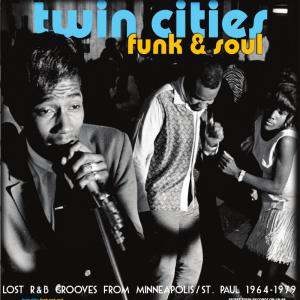
TWIN CITIES FUNK & SOUL: Lost Grooves from Minneapolis/St. Paul 1964-1979


I recently stumbled across this amazing anthology from Minneapolis based record label Secret Stash, somehow having missed its release in 2012.  What caught my eye were the tracks from the Prophets of Peace, a band that was based in my south Minneapolis neighborhood.  They were older than me and my friends; when we were just learning how to play our drums and guitars and horns, I was always impressed and intimidated when I could jam with someone whose brother was in that band... or who had played with a Prophet.  But I hadn't thought about the band in years.

So this album was a true find.  Even better, its grooves (pun intended) contain a wealth of musical history that I didn't know about my hometown in the era BP (Before Prince).  The music is excellent and the packaging is even better.  Take a look at the fantastic "newspaper" that Secret Stash produced for TCF&S by clicking on the following:


This project was obviously a labor of love, given all the time and work that went into researching and writing the "newspaper," tracking down and clearing various recordings from 40-50 years ago, and putting the whole shebang out on vinyl and CD. The music itself is priceless, but overall music sales continue to shrink as more people prefer to simply stream content - and issuing an anthology of relatively obscure music is not a way to get rich.


TRACKS
1. All Day Long - The Valdons
2. Sock-A-Poo-Poo '69 (Part 1) - Maurice McKinnies & The Champions
3. Work Your Flapper (Part 1) - Jackie Harris & The Champions
4. She's A Whole Lot's A Woman - Mojo And His 'Chi 4'
5. Ridin' High - Dave Brady And The Stars
6. I Ain't Gonna Cheat on You No More - Wee Willie Walker
7. Save Me - Wanda Davis
8. Get Funky, Sweet a Little Bit - Jackie Harris & The Exciters
9. There Goes My Used to Be - Wee Willie Walker
10. Take Care - Wanda Davis
11. Sweet Smell Of Perfume - Maurice McKinnies & The Champions
12. Baby, Baby I Need You - Dave Brady And The Stars
13. Love Me, Leave Me - The Valdons
14. Dipstick - Willie and The Bumblebees
15. Rusty McDusty - Morris Wilson
16. Thieves In The Funkhouse - Band of Thieves
17. You Can Be - Prophets of Peace
18. Saxophone Disco - Morris Wilson
19. Honey From The Bee - Willie and The Bumblebees
20. The Maxx - Prophets of Peace
21. Get Up - The Lewis Connection

So I tip my hat to everyone involved in putting out this album.  The rest of Secret Stashes' catalog looks interesting and I'm eager to check it all out.  In the meantime, Secret Stash's Eric Foss, the man behind TCF&S, has some answer for my seven questions:

1 - What was the inspiration or catalyst for producing TCF&S - and did the concept evolve between the initial idea and the final product?  

Eric Foss: The idea started when we got hipped to a record by a band called the Lewis Connection (though it’s misspelled on the album jacket).  We met with the band leader and he gave me a copy of the record.  He wanted to a deal for the record, but part of what makes that record so collectible is also what makes it tough to deal with.  Prince plays guitar on a couple tracks.  It’s really what would sell the record.  But The Purple One is well-known around these parts for being one of the most litigious people you could ever come across.  

I think that is what honestly first started the conversation about a compilation.  Even still, it took us at least 6 months before we knew what the goal for a finished project was. 

The Lewis Connection - "Get Up"

2 - Were there any tracks you really wanted to use but were unable to find or couldn't clear the rights for, etc?  

EF: Yes, they will remain nameless at this point because A) we may end up licensing them for something else, and B) some of that left a few people feeling very disappointed.  

I remember one track in particular was a real letdown for us.  The guys in the band wanted a shit ton of money for the license.  I had to tell them we couldn't do it.  Then they called me like a day after we approved the test pressings and said they’d go with my original offer (which was like a tiny fraction of what they said they wanted).  It was a real bummer. 


3 - You had an album release party in September, 2012, featuring performances from a number of the musicians from TCF&S. What was that like? 

EF: Life-changing.  Basically that show was supposed to be a onetime thing, but I was getting non-stop offers to bring the show to different festivals and events around the Twin Cities.  The problem was, I knew it had a short shelf life.  A very short shelf life.  We (I say we because I wound up drumming for most of that stuff) weren't writing and recording new material, and frankly didn't have the ability to that well if we wanted.

I saw very serious excitement for what we were doing, but saw that within a year, no one would really care anymore.  How many times can you put on the same show in the same town?  

Anyhow, I say it was life-changing, because after identifying the limitations of what we were doing, I started a new band with one of the singers called Sonny Knight & The Lakers.  For years I swore I wouldn't work “new” records at Secret Stash.  But now here I am just weeks away from the debut of the first Sonny Knight & The Lakers LP. 

4 - Secret Stash released TCF&S on collectible vinyl and CD, but why is it not available to buy as a download?  

EF: A couple guys thought they could do digital themselves.  I wound up giving them some names and phone numbers of people who could help with that.  For something like this, to me it’s all or none.  I wasn't going to put the record on iTunes with a few tracks missing.  


5 - What about this project did you find most gratifying? 

EF: Getting know and play with the artists. 

Prophets of Peace - "You Can Be"

6 - What was the most challenging aspect of producing TCF&S? 

EF: Woof…. Clearing the rights and organizing the live events.  Also, I wound up laying out that newspaper that’s tucked inside the LP myself.  I had literally never used Indesign a day in my life when I decided to do that.  That shit sucked.  Will (GM at SSR) and I had about 7-10 days of very little sleep leading up the deadlines for print materials. 

7 - For anyone who loves this anthology, what would you recommend be the next album they listen to from the Secret Stash catalog? 

EF: Hands down, it’s the new Sonny Knight And The Lakers album.  This band got started by covering material off the TCFS comp.  It’s really where the roots of our sound lies. 

http://sonnyknight.com/

Where has your father gone?

Vdova - The Nightingale Trio

The term "World Music" is so broad that it borders on silly.  Generally, anything that isn't English language pop or Western classical music can be and has been categorized as such.  Cuban jazz, Algerian rai, Polynesian drumming, Brazilian salsa, J-pop, klezmer, Celtic, Cajun... the list is endless.

Whether or not it makes sense to combine all these diverse and rich genres under one heading is debatable.  There's no denying, however, that expanding your musical horizons beyond the Top 40 opens up worlds of rhythm, melody, harmony and instrumentation you never even knew existed.

Nowadays it's easy to explore this cornucopia.  You can wander down a million musical rabbit holes online and listen to any type of song, any time, any where.

It hasn't alway been thus.  A generation ago, if you lived in an area that had a public radio station, you occasionally might have heard World Music.  Your library may have had a few records.  Or perhaps you'd read a review somewhere that opened your eyes and ears.

I don't recall how I came across the following album, which I bought on cassette...      


...but it was one of of the most strikingly distinct things I had ever heard.  While the acapella woman's voices had echoes of familiar religious music, the tone and (especially) the harmonies were strange. Strange and beautiful.  I loved it immediately.


"Le Mystere des Voix Bulgares" ("The Mystery of Bulgarian Voices") is a collection of folk songs by the Bulgarian State Radio and Television Female Vocal Choir.  The album was released in the US in 1987 and three years later the group's second album won a Grammy.

Fast forward to this year, when I was deep in one of the musical rabbit holes I mentioned above.  I came across a video shot under frozen Minnehaha Falls in Minneapolis.  That alone was enough to enticement me.

To my delight, the music was as wonderful as the setting.


It turns out the Nightingale Trio is a unique act, one inspired by the folk songs of the Balkans and Eastern Europe (such as "Le Mystere des Voix Bulgare").  While remaining true to the music's traditions, the trio also brings a unique approach to this type of singing.

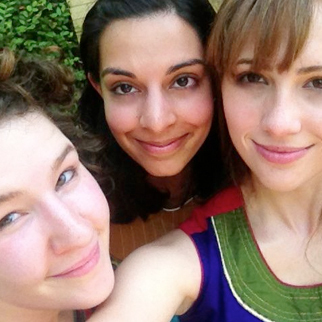
Sarah Larsson, Nila Bala, and Rachel LaViola met at Yale as members of the Women's Slavic Chorus.  Now based in Minneapolis, San Jose, and Dallas, respectively, they continue to perform together.

You can learn more about the three of them and their music at nightingaletrio, facebook.com/TheNightingaleTrio and thenightingaletrio.bandcamp.com

I had the chance to ask Sarah and Nila about recording "Vdova."
1 -  As a teenager, I enjoyed exploring underneath/behind Minnehaha Falls, which may or may not have been permitted.  What was it like singing in this unique environment and why was it chosen?
Sarah Larsson: Why we chose that spot: We had already filmed another video with Trent Waterman from North Shore Sessions, and we loved his work.  We contacted him about filming another video, with our thought being, “Something haunting, beautiful, still—like winter.”  

His first suggestion was the Falls!  Since I live in Minneapolis, I had actually explored back there before, and knew it would be magical.  Actually, the first time I climbed back there, I was by myself, and I couldn’t help but sing.  The cavern makes a beautiful acoustic space.

2 - The trio includes a Minnesotan, a Texan and a Californian.  Did the cold winter air affect your voices, particularly for the two of you coming from warmer climes?
SL: Totally!  You can’t tell in the video, but I was moments away from drooling almost the entire time.  Trent, the videographer, took off his gloves to do the filming, and we were completely impressed at his fortitude.  In the cave, the air was a little warmer than the air outside, but we still happened to be singing in Minnesota during the coldest weekend on record — the “polar vortex”, if you remember!

Nila Bala: Cold weather is definitely something we have to watch out for.  We like to keep warm water or tea close by, and cough drops to counteract the cold.  Since we didn't have to do too many takes for Vdova, our voices survived the adventure!
3 - "Vdova" is a sad song about a woman learning that her husband has been killed, his body scattered by ravens. Since most of your listeners are unlikely to understand Ukrainian, how much is your song choice dictated by "sounds amazing" and how much by "great lyrics"?
NB: I think its hard to separate the "sounds amazing" from the "great lyrics," since the meaning of the song drives the sound and the way it is rendered.  It is important for us to know the meanings of the songs, so we can imbibe the songs with that feeling, even if our listeners may not understand Ukrainian. 


Sarah Larsson

SL: Most of our first impressions about songs are based on the harmonies and aesthetics, sound-wise.  Pretty often, we find out about the meaning of a song in a general way at first, and don’t get literal translations until we are already performing the songs and meet a native speaker.  Other times, we learn the songs directly from a master-singer, who tells us all the song’s background right away.  

For this one, we knew it was a widow’s song from the start, and we hope that the sorrow in the song comes through just through the feeling in the tune.  

In any case, so so many of the songs are about the stark, real, often-desperate calling-out of women in the old country.  Other songs say, “Mother, oh please do not marry me off; I will forever miss my friends and my little garden.”  Somehow, we love these sorrowful stories, too.  Other songs, of course, are as joyful as can be.
4 - Do you sing this any differently than would a traditional group of Ukrainian women?
SL: Yes, our style is very different.  Traditional folk Ukrainian is a bit more brash, and “forward”, to use the language of vocal production.  It varies a lot region to region, but here is an example that is pretty typical of what we have heard: http://www.youtube.com/watch?v=wAfBO9vMwt4.  

Our style is different, but we have grown into our style through being really focused on listening in to each other, and letting our harmonies ring.  

Ukraine is, admittedly, one of the nations whose music we know least about.  We’ve studied with master singers from Bulgaria, Croatia, Serbia, Bosnia, and Russia, but not yet Ukraine.  

Also, it’s interesting to note that we each have very different singing backgrounds.  Nila was trained in classical South Indian music, and also performed in touring Broadway shows as a child.  Rachel has no formal music training, but is also a phenomenal country and bluegrass singer.  I had most of my vocal training in a classical Western women’s choir, and I’ve also studied music of several West and East African traditions.  We all come together!

NB: We try our best to sing Slavic music as authentically as we can--meaning the pronunciation, the vocal placement, and the tone.  However, we are not fluent in the languages we sing in, nor is it the only type of music we enjoy, so you are likely to notice some differences. 

If you listen to traditional Ukrainian women's groups, you might find that they have an even louder, fuller, tone, with a heavier vibrato than we use.  However, even within Ukrainian voices you will likely notice differences, since every vocal group makes different stylistic choices.


Nila Bala
5 - The three of you live in different places, so singing together live is not always an option.  Do you ever rehearse a song like "Vdova" via Skype or other digital technology?
NB: For now, electronic rehearsals are not a good option given the feedback and delays that occur.  We tend to learn our parts very well on our own, and then come together before our tours to put our songs together.

SL: We have tried to use Google hangouts, but the problem is that the program mutes your microphone while anyone else is talking!  So no, that doesn’t work for us.  What we do instead is have our hangouts to plan tours and repertoire, and then we all go home and learn our parts on our own.  We convene for an afternoon before our gigs start for each tour and put everything together.  We’re constantly emailing back and forth with new music ideas.


Rachel LaViola

6 - The video was produced for the North Shore Sessions.  What are they and how did the Nightingale Trio get involved?
SL: North Shore Sessions is an awesome project based in Minnesota, that films local and touring bands playing in interesting spaces.  Most of the videos they film are taken in one single shot without cuts, so they have a great live feel.  

I learned about it because Trent Waterman filmed videos of several musician friends here in town (The Hummingbirds: http://www.youtube.com/watch?v=AREG8tX04bU and Lynn O’Brien: http://www.youtube.com/watch?v=lzs1UgXACpA).  Trent is also a good friend. 

There are a lot of amazing local artists in Minneapolis-St. Paul, and Trent does all of his filming just out of his own artistic passion for good music and for film.
7 - Did you nail this video on the first take?
SL: We did about 5 takes of this song, but I think this version is maybe the 3rd or 4th one.  It took us a moment to get into singing mode after climbing up an ice covered waterfall (!), and then we needed a bit of time to get the sound right. Fun detail: we recruited some strangers who were also exploring that day to guard the entrance to the cave, so no one would walk into the shot.  


A letter from you know who

A Letter from Anne Marie - Grant Hart

Songs that one loves are generally easy to categorize - those that were huge hits; those that feel like they should have been; and those that will only appeal to a smaller audience for whatever reason.  I usually can sort my favorites into these buckets without a problem.  But once in a while there's a song I could listen to endlessly on a loop and I can't quite grasp if it's something a lot of other people would like if they heard it or if it's just me.

"A Letter from Anne Marie" by Grant Hart is a prime example.  To me, it could be a Phil Spector produced track for David Bowie from the 1970s that became an FM staple.  Or maybe a lost Lennon track from the White Album.  But that's not to say that it's a facsimile of other artists - it's a total original by Hart that he sings with real passion.  It strikes home to me.  Everyone can relate to waiting in vain for a letter that never comes - even though now, only 13 years after the song was released, a personal letter arriving via US Mail is a rare thing.

Below the jump: the music and some thoughts from Grant, who graciously responded to my queries with humor and great candor, as you will see.