Showing posts with label folk music. Show all posts

James James Morrison's mother seems to have been mislayed

JAMES JAMES MORRISON MORRISON - The Chad Mitchell Trio


As a boy at summer camp, I learned a fun song about a little boy with a funny name who, in a role reversal with his mother, warned her about the dangers of wandering too far from home.  The song, "James James Morrison Morrison," as I later discovered, was recorded by the Chad Mitchell Trio in 1963.  Mitchell himself composed the tune and used the words of a poem by A. A. Milne, the creator of Winnie the Pooh.

If you are not familiar with the CMT (as I will abbreviate them), you should be, as they were a talented group that sprung from the folk music scene in the late 1950s.  Their combination of musicality, humor, and a political point of view is unique and compelling.

While adept at various types of traditional folk songs, the trio really made their mark with satirical topical songs.  Their targets included the KKK, segregation, and the John Birch Society (a far right anti-Communist organization).


The CMT also had a knack for finding great young songwriters and singing their songs - among others, Tom Paxton (whose "Ramblin' Boy" and "Can't Help But Wonder Where I'm Bound" I also learned at camp) and Bob Dylan.  In fact, they were the first act to release "Blowin' in the Wind," a few months before Dylan and Peter, Paul and Mary released theirs.
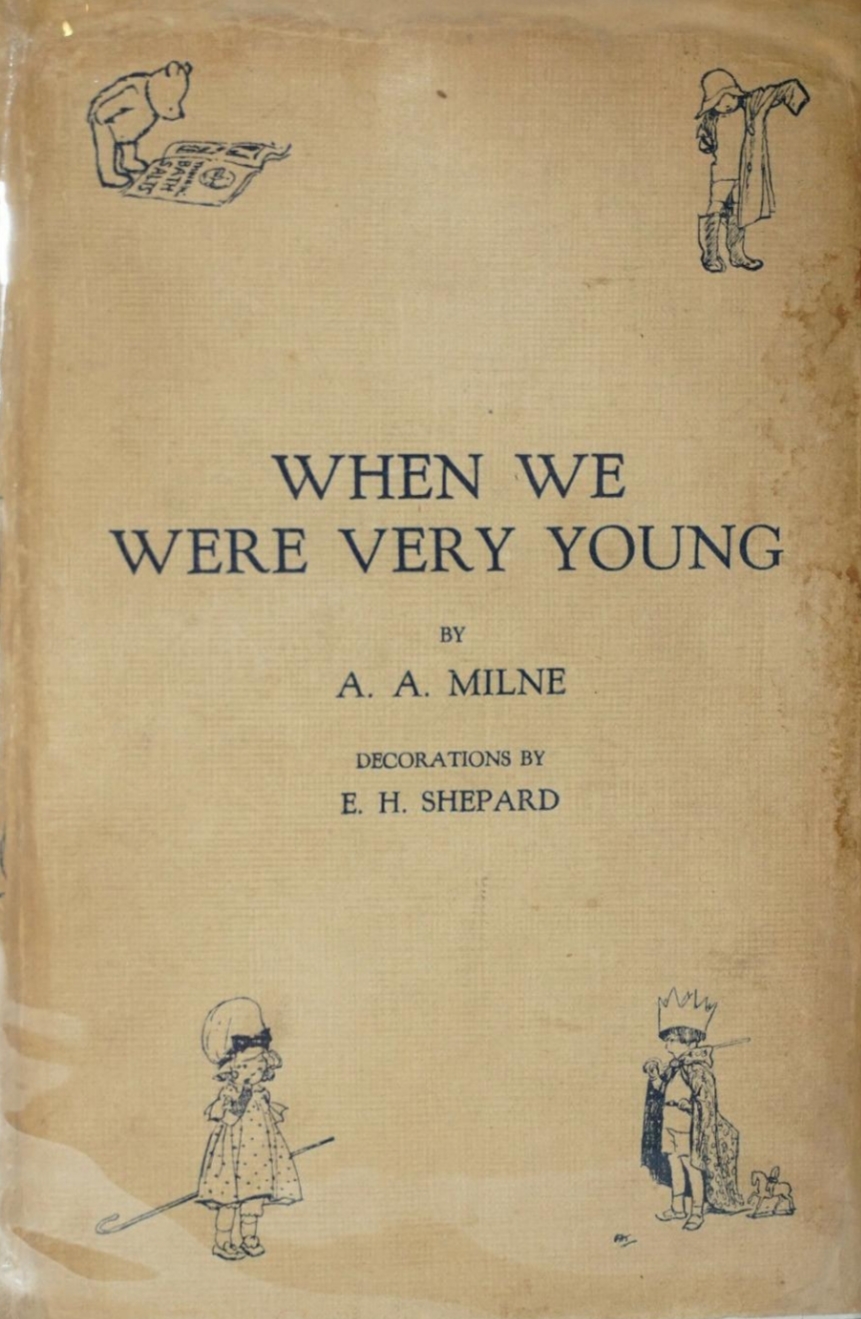


The British writer A. A. Milne wrote a book of children's poetry titled "When We Were Very Young" in 1924, four years after the birth of his son Christopher Robin.  One of the poems within, "Disobedience," provided the words that Chad Mitchell would use four decades later to create "James James Morrison Morrison."


Illustration for "Disobedience"


You can see the track listing for "James James Morrison Morrison" below on the back cover of the CMT's "At The Bitter End" album (The Bitter End is a club in NYC where this LP was recorded live).  The essay on the back cover also mentions the song and is a good snapshot of the act in 1963.
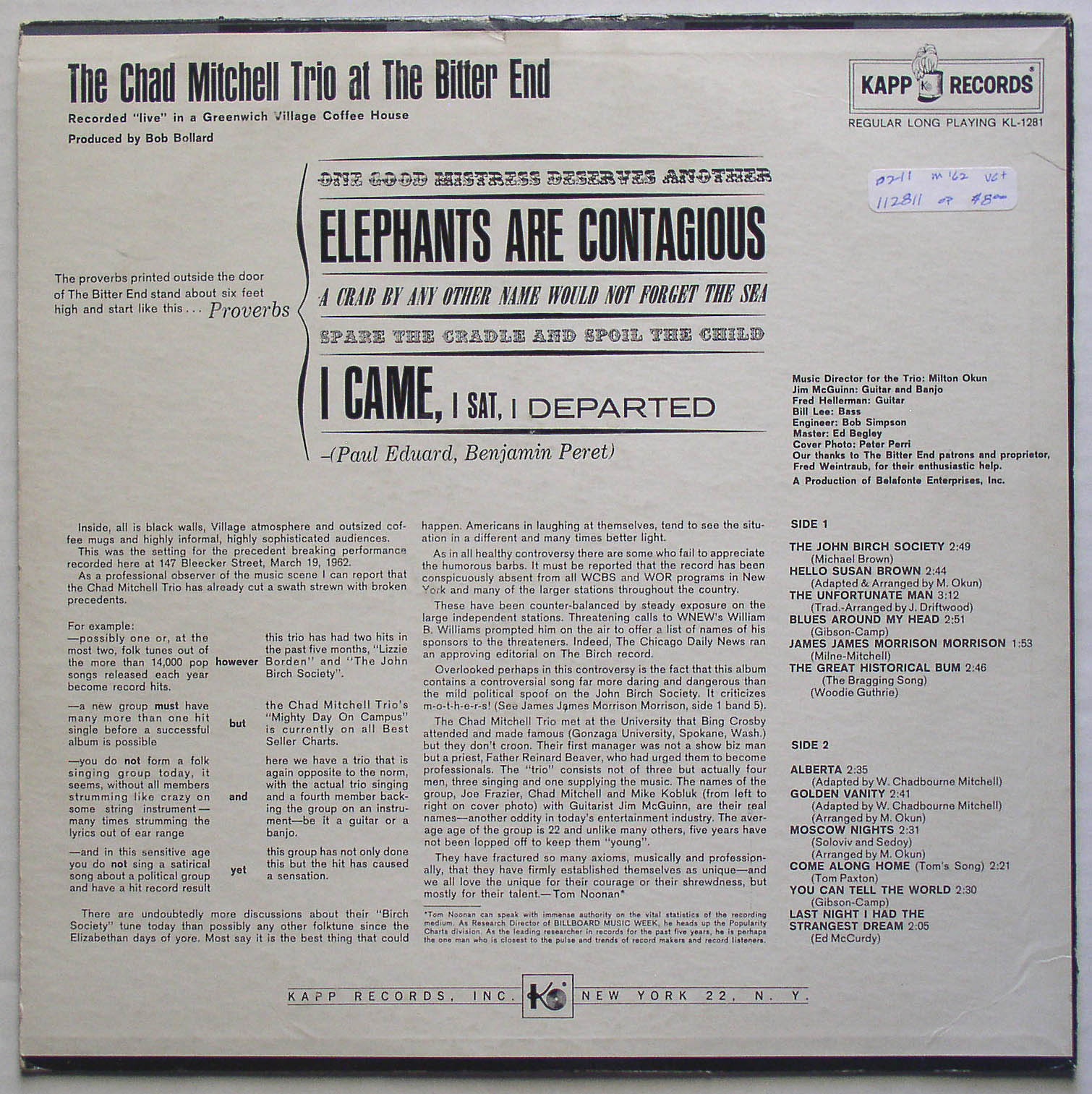


And here is that recording:


If this song is new to you, I hope you love it as much as I do.  Sing it, share it, teach it.  It's a great song for group singing.

I'm happy to report that Chad Mitchell himself kindly took time recently to answer my questions about "James James Morrison Morrison."

1 - Did you know A. A. Milne's poem "Disobedience" from reading it as a child or how did you come across it?

CHAD MITCHELL: In the eighth grade, our teacher, Gail Johnson, used to read "Disobedience" to us all the time. I had never read any of A. A. Milne's works but that piece remained with me through the years.
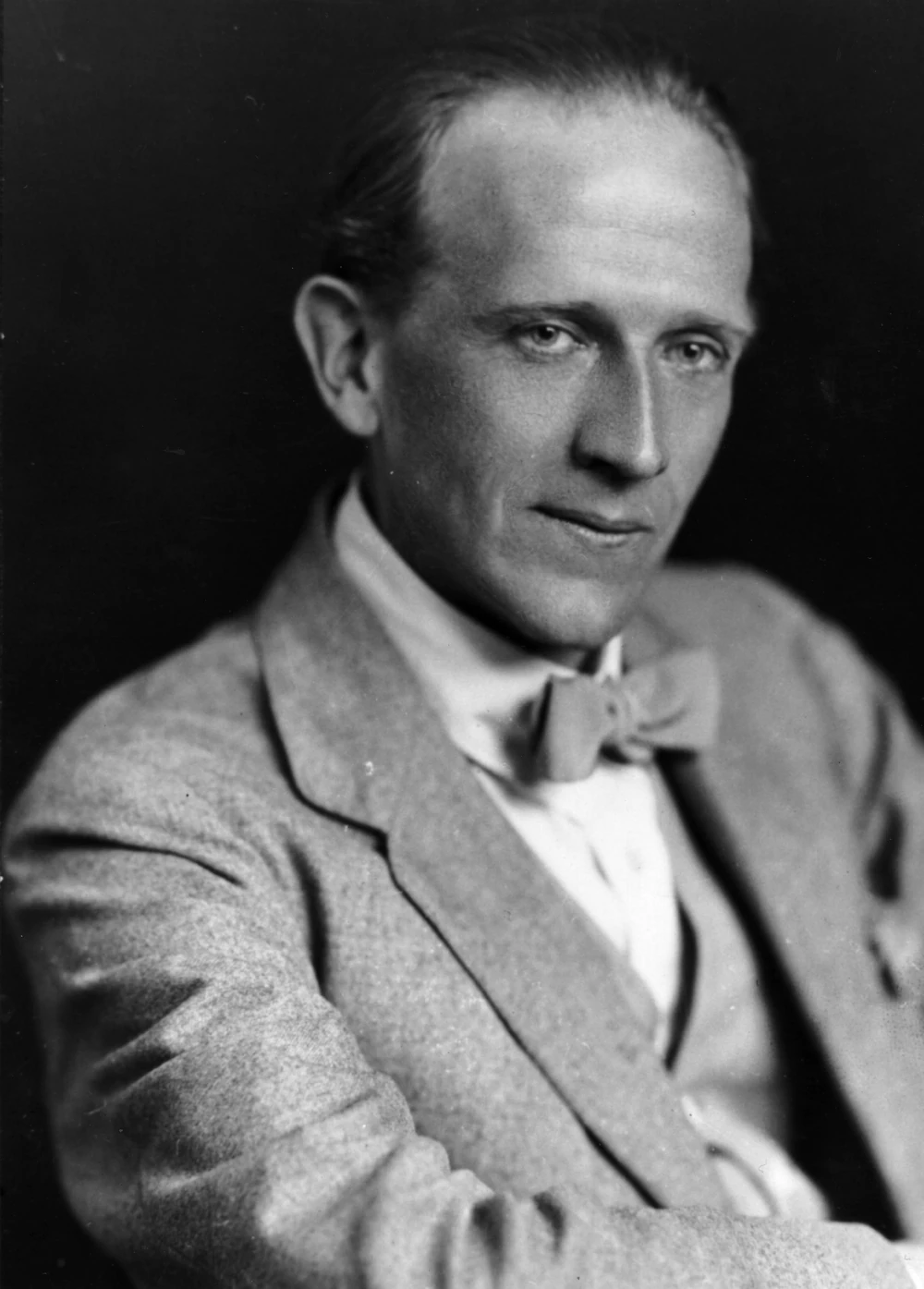

A. A. Milne
2 - What inspired you to set it to music?

CM: Since "Disobedience" had remained with me for so long, I felt it was a perfect vehicle for performance. So, since I didn't play an instrument, I hummed and hummed until a melody finally came out.

3 - Do you recall the reaction of the other trio members, your management and live audiences when you first played it for them?

CM: Our manager at the time didn't have input to our repertoire, but the other Trio members and our musical director, Milt Okun, and our accompanist, Jim McGuinn, all loved the idea.

Editor's note: Jim McGuinn, later known as Roger McGuinn, founded the legendary rock band The Byrds a few years later.

4 - I learned this song at summer camp. Did you hear of it being popular at other camps, schools, and so on?


CM: No, I didn't but I'm really pleased it got that kind of exposure.


Chad Mitchell 1969 promo photo

5 - A. A. Milne died a few years before you recorded this song. Were you involved at all in getting permission to use his words or was that handled by management?


CM: I had very little to do with our licensing at that time, so I really don't know what happened. I do know that sometime after the release of our "At the Bitter End" album on which "Disobedience" appeared, the Disney Co. sent me a letter advising that they controlled Milne's works. Since the horse was out of the barn, I think they put it in their publishing company and gave me a percentage of the writing royalties.

6 - Did you ever hear from any of Milne's relatives, friends or associates as to what they thought about your adaptation?


CM: No, I've never been contacted by his family or friends.

7 - Are there any other memories, stories or thoughts about "James James Morrison Morrison" you'd like to share?

CM: Someone told me that Gail Johnson was made aware of our rendition and that it brought tears to her eyes. I hope that was a positive response. It remained in our performing repertoire and always delighted the audience.

Another thing that comes to mind is about a very special gift that was given to my wife, Christine, and me when our daughter, Anne-Claire, was born.

I was Director of Entertainment for The Delta Queen Steamboat Co. back in the '80s and the company's graphic designer, Shirley Davis, presented us with a calligraphy on which she had inscribed the entire version of "Disobedience." Being the expert graphic artist she was, she framed the poem with a musical staff on which she faithfully notated the whole melody in gold leaf. Needless to say, we were dumbstruck by her skill and generosity. It has hung in a prominent place in our home ever since.


Read more about Chad's music at chadmitchelltrio.com

It Is Not Real, It Does Not Grow

"TATTOO SONG (Daisy on my Toe)" -- Mason Williams

Many summer camps and Girl Scout troops know this song:


What they often don't seem to know is who wrote it.  In fact, most assume it's a folk song, handed down over so many years that no one remembers where it originated.  It's time to correct that misconception.


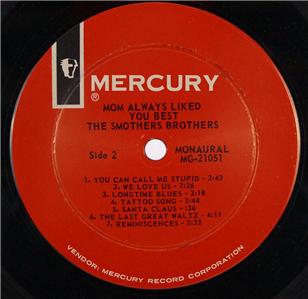
In fact, "Tattoo Song" debuted in 1965 on a best-selling album by the Smothers Brothers, "Mom Always Liked You Best."  Like most of the duo's cuts, it combined humor and music.


So who wrote it?  A man who has been awarded an Emmy and two Grammys.  A man who is an accomplished guitarist, comedian, artist, poet and author.  His name is Mason Williams, and he is best known for ""Classical Gas," a huge hit in 1968 whose popularity has never waned in the decades since its release.


Williams received his two Grammy Awards for composing and performing "Classical Gas."  At the time, he was head writer for the Smothers Brothers Comedy Hour, a groundbreaking, controversial and popular television variety show.  For this work, he landed his Emmy,

A few years earlier, just before he wrote "Tattoo Song," Williams released an album called "Them Poems," a collection of humorous short pieces he sung or recited before a live audience.  That same year, the Kingston Trio ("Tom Dooley," "Charlie and the MTA,") included a few of these tunes on their live album:


"Tattoo Song" is seemingly just one of many short comedic songs written by Williams at a time when he was busy with a a variety of successful creative endeavors, one which could have gently faded into the past.  Instead, it has taken on a life of its own, inspiring countless numbers of camp counselors to get a daisy tattooed on her or his toe.

I caught up with Williams recently to quiz him about a song for which he gets so little credit.

Did you or someone you know have a daisy tattoo...

Mason Williams: No.

...or did something else inspire the lyrics?

MW: Song to sing after getting tattoo.

Did you write the song specifically for the Smothers Brothers? 

MW: No

On the recording, the brothers do their usual comedic banter before they play the actual song. Given that you were later the head writer for their television series, were you involved in writing this banter or just the song itself? 

MW: Could be either, don't remember.

It appears you've never recorded a version of the song.  Was it ever part of your live act?

MW: No

You've written a lot of terrific music.  And thoughts on why this particular tune took on a new life as a popular song for Girl Scouts and summer camp kids? 

MW: Surprise to me!  Not sure how / why it caught on.

You and the artist Ed Ruscha were roommates in Los Angeles in 1964; your website says you composed Tattoo Song on 9/12/64.  Was there much creative interaction/inspiration between you two or were you both off in your own artistic worlds?  

MW: We went on DADA dates.

When you wrote the song, did you foresee the day when having a tattoo would be as mainstream as it has become? 

 MW: Nope, tattoos were basically the realm of sailors & criminals.

A Big Mac on my Breath

JUNK FOOD JUNKIE - LARRY GROCE

The day after Christmas, I took my guitar to McCabe's in Santa Monica for repairs.  While perusing the musical equipment for fun, I saw this on the wall beneath some mandolins:


My photo's a bit blurry, but what is shows is a framed copy of Larry Groce's #9 single from 1976, "Junk Food Junkie," along with a note stating that the single had been recorded at McCabe's, which in addition to selling and repairing guitars also hosts intimate concerts.

That piqued my curiosity - why was it recorded there?

But before we get to that, let me ask you a question:

How many people write and record a Top Ten single AND put out two platinum record and six gold records of children's music for Disney AND serve as artistic director/host/co-founder of one of the country's best live music shows for thirty years?


Probably just one person, Larry Groce.

The Top Ten single is "Junk Food Junkie," obviously.

The Disney records include the Grammy nominee "Winnie-the-Pooh for President" as well as four volumes of "Children's Favorite Songs."

The live music series is NPR's "Mountain Stage," which has been presenting an impressive variety of top notch musicians since 1983.  I assume you're familiar with this radio institution, but if not, please click the hyperlink and dig in. 

Here's Larry performing "Junk Food Junkie" on "Mountain Stage."  Then we get the answer to "why was the single recorded at McCabe's" and more.


1 - Why did you record this at McCabes instead of in a studio or some other performing space? 

LARRY GROCE:  McCabe's recorded my performance there without telling me. When we (me and my manager at the time) found out about the recording we asked to hear it and get a copy. A little later we decided to make the performance into a recording. A studio version wouldn't have worked. 


2 - These days, are you more Mr. Natural or more Junk Food Junkie?

LG:  Still half and half. 

3 - Where did Peter Alsop, who was the first person to record JFJ, hear your song?

LG:  Peter was a friend. I don't think his recording was released before my original independent version in 1975 on my former manager/producer's label. The Warner-Curb release wasn't until 1976. 

4 - I read that Berke McKelvey played fretless bass on the track; true?

LG:  I don't think Berke played on that recording. The bass and drums were overdubbed and I forget who played them - I wasn't at that overdub session. I was playing solo at McCabe's when it was recorded. However, Berke did play with me most of the time back then. He plays with Chandler Travis now and teaches at Berklee.

5 - Why do you think that satirical songs have seemingly disappeared from pop culture?

LG:  I don't think satire and novelty material has disappeared, it just switched from sound recordings to YouTube videos.

6 - Did you watch the Jackson Five sing JFJ with McKenzie Phillips on their television show?

LG:  I didn't see it live but got a video of it. A lot of people supposedly performed the song in different ways: Dinah Shore on her TV show, Marilyn McCoo and Billy Davis Jr. (of the Fifth Dimension) in their club act, Judy Collins with the Boston Pops and several more. I'd liked to have seen how they all did it, it's such an odd song.


The Jacksons & Mckenzie Phillips - Junk Food... by choucoune92

7 - What do you recall of your appearance on the Tonight Show?

LG:  I just remember that it was a high pressure show and they acted like it was the most important thing in the world so don't screw up.

I had met Dick Cavett on the Merv Griffin show and remembered reading in his bio that the first time he walked on stage at the Tonight Show he could see himself walking onto the TV at his aunt's house in Nebraska. It was like that. I was nervous but got through it.

Joan Rivers was guest host. My teenage sister had flown out from Dallas to see it and we got a laugh when Joan, who had never met me and did not meet me that day, either, opened the show saying that everyone on the show were her good friends. Welcome to show business.


Where has your father gone?

Vdova - The Nightingale Trio

The term "World Music" is so broad that it borders on silly.  Generally, anything that isn't English language pop or Western classical music can be and has been categorized as such.  Cuban jazz, Algerian rai, Polynesian drumming, Brazilian salsa, J-pop, klezmer, Celtic, Cajun... the list is endless.

Whether or not it makes sense to combine all these diverse and rich genres under one heading is debatable.  There's no denying, however, that expanding your musical horizons beyond the Top 40 opens up worlds of rhythm, melody, harmony and instrumentation you never even knew existed.

Nowadays it's easy to explore this cornucopia.  You can wander down a million musical rabbit holes online and listen to any type of song, any time, any where.

It hasn't alway been thus.  A generation ago, if you lived in an area that had a public radio station, you occasionally might have heard World Music.  Your library may have had a few records.  Or perhaps you'd read a review somewhere that opened your eyes and ears.

I don't recall how I came across the following album, which I bought on cassette...      


...but it was one of of the most strikingly distinct things I had ever heard.  While the acapella woman's voices had echoes of familiar religious music, the tone and (especially) the harmonies were strange. Strange and beautiful.  I loved it immediately.


"Le Mystere des Voix Bulgares" ("The Mystery of Bulgarian Voices") is a collection of folk songs by the Bulgarian State Radio and Television Female Vocal Choir.  The album was released in the US in 1987 and three years later the group's second album won a Grammy.

Fast forward to this year, when I was deep in one of the musical rabbit holes I mentioned above.  I came across a video shot under frozen Minnehaha Falls in Minneapolis.  That alone was enough to enticement me.

To my delight, the music was as wonderful as the setting.


It turns out the Nightingale Trio is a unique act, one inspired by the folk songs of the Balkans and Eastern Europe (such as "Le Mystere des Voix Bulgare").  While remaining true to the music's traditions, the trio also brings a unique approach to this type of singing.

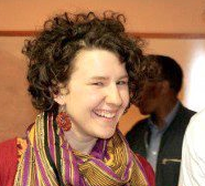
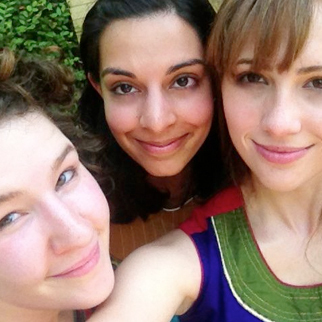
Sarah Larsson, Nila Bala, and Rachel LaViola met at Yale as members of the Women's Slavic Chorus.  Now based in Minneapolis, San Jose, and Dallas, respectively, they continue to perform together.

You can learn more about the three of them and their music at nightingaletrio, facebook.com/TheNightingaleTrio and thenightingaletrio.bandcamp.com

I had the chance to ask Sarah and Nila about recording "Vdova."
1 -  As a teenager, I enjoyed exploring underneath/behind Minnehaha Falls, which may or may not have been permitted.  What was it like singing in this unique environment and why was it chosen?
Sarah Larsson: Why we chose that spot: We had already filmed another video with Trent Waterman from North Shore Sessions, and we loved his work.  We contacted him about filming another video, with our thought being, “Something haunting, beautiful, still—like winter.”  

His first suggestion was the Falls!  Since I live in Minneapolis, I had actually explored back there before, and knew it would be magical.  Actually, the first time I climbed back there, I was by myself, and I couldn’t help but sing.  The cavern makes a beautiful acoustic space.

2 - The trio includes a Minnesotan, a Texan and a Californian.  Did the cold winter air affect your voices, particularly for the two of you coming from warmer climes?
SL: Totally!  You can’t tell in the video, but I was moments away from drooling almost the entire time.  Trent, the videographer, took off his gloves to do the filming, and we were completely impressed at his fortitude.  In the cave, the air was a little warmer than the air outside, but we still happened to be singing in Minnesota during the coldest weekend on record — the “polar vortex”, if you remember!

Nila Bala: Cold weather is definitely something we have to watch out for.  We like to keep warm water or tea close by, and cough drops to counteract the cold.  Since we didn't have to do too many takes for Vdova, our voices survived the adventure!
3 - "Vdova" is a sad song about a woman learning that her husband has been killed, his body scattered by ravens. Since most of your listeners are unlikely to understand Ukrainian, how much is your song choice dictated by "sounds amazing" and how much by "great lyrics"?
NB: I think its hard to separate the "sounds amazing" from the "great lyrics," since the meaning of the song drives the sound and the way it is rendered.  It is important for us to know the meanings of the songs, so we can imbibe the songs with that feeling, even if our listeners may not understand Ukrainian. 


Sarah Larsson

SL: Most of our first impressions about songs are based on the harmonies and aesthetics, sound-wise.  Pretty often, we find out about the meaning of a song in a general way at first, and don’t get literal translations until we are already performing the songs and meet a native speaker.  Other times, we learn the songs directly from a master-singer, who tells us all the song’s background right away.  

For this one, we knew it was a widow’s song from the start, and we hope that the sorrow in the song comes through just through the feeling in the tune.  

In any case, so so many of the songs are about the stark, real, often-desperate calling-out of women in the old country.  Other songs say, “Mother, oh please do not marry me off; I will forever miss my friends and my little garden.”  Somehow, we love these sorrowful stories, too.  Other songs, of course, are as joyful as can be.
4 - Do you sing this any differently than would a traditional group of Ukrainian women?
SL: Yes, our style is very different.  Traditional folk Ukrainian is a bit more brash, and “forward”, to use the language of vocal production.  It varies a lot region to region, but here is an example that is pretty typical of what we have heard: http://www.youtube.com/watch?v=wAfBO9vMwt4.  

Our style is different, but we have grown into our style through being really focused on listening in to each other, and letting our harmonies ring.  

Ukraine is, admittedly, one of the nations whose music we know least about.  We’ve studied with master singers from Bulgaria, Croatia, Serbia, Bosnia, and Russia, but not yet Ukraine.  

Also, it’s interesting to note that we each have very different singing backgrounds.  Nila was trained in classical South Indian music, and also performed in touring Broadway shows as a child.  Rachel has no formal music training, but is also a phenomenal country and bluegrass singer.  I had most of my vocal training in a classical Western women’s choir, and I’ve also studied music of several West and East African traditions.  We all come together!

NB: We try our best to sing Slavic music as authentically as we can--meaning the pronunciation, the vocal placement, and the tone.  However, we are not fluent in the languages we sing in, nor is it the only type of music we enjoy, so you are likely to notice some differences. 

If you listen to traditional Ukrainian women's groups, you might find that they have an even louder, fuller, tone, with a heavier vibrato than we use.  However, even within Ukrainian voices you will likely notice differences, since every vocal group makes different stylistic choices.


Nila Bala
5 - The three of you live in different places, so singing together live is not always an option.  Do you ever rehearse a song like "Vdova" via Skype or other digital technology?
NB: For now, electronic rehearsals are not a good option given the feedback and delays that occur.  We tend to learn our parts very well on our own, and then come together before our tours to put our songs together.

SL: We have tried to use Google hangouts, but the problem is that the program mutes your microphone while anyone else is talking!  So no, that doesn’t work for us.  What we do instead is have our hangouts to plan tours and repertoire, and then we all go home and learn our parts on our own.  We convene for an afternoon before our gigs start for each tour and put everything together.  We’re constantly emailing back and forth with new music ideas.


Rachel LaViola

6 - The video was produced for the North Shore Sessions.  What are they and how did the Nightingale Trio get involved?
SL: North Shore Sessions is an awesome project based in Minnesota, that films local and touring bands playing in interesting spaces.  Most of the videos they film are taken in one single shot without cuts, so they have a great live feel.  

I learned about it because Trent Waterman filmed videos of several musician friends here in town (The Hummingbirds: http://www.youtube.com/watch?v=AREG8tX04bU and Lynn O’Brien: http://www.youtube.com/watch?v=lzs1UgXACpA).  Trent is also a good friend. 

There are a lot of amazing local artists in Minneapolis-St. Paul, and Trent does all of his filming just out of his own artistic passion for good music and for film.
7 - Did you nail this video on the first take?
SL: We did about 5 takes of this song, but I think this version is maybe the 3rd or 4th one.  It took us a moment to get into singing mode after climbing up an ice covered waterfall (!), and then we needed a bit of time to get the sound right. Fun detail: we recruited some strangers who were also exploring that day to guard the entrance to the cave, so no one would walk into the shot.