Showing posts with label Top 40. Show all posts

A Big Mac on my Breath

JUNK FOOD JUNKIE - LARRY GROCE

The day after Christmas, I took my guitar to McCabe's in Santa Monica for repairs.  While perusing the musical equipment for fun, I saw this on the wall beneath some mandolins:


My photo's a bit blurry, but what is shows is a framed copy of Larry Groce's #9 single from 1976, "Junk Food Junkie," along with a note stating that the single had been recorded at McCabe's, which in addition to selling and repairing guitars also hosts intimate concerts.

That piqued my curiosity - why was it recorded there?

But before we get to that, let me ask you a question:

How many people write and record a Top Ten single AND put out two platinum record and six gold records of children's music for Disney AND serve as artistic director/host/co-founder of one of the country's best live music shows for thirty years?


Probably just one person, Larry Groce.

The Top Ten single is "Junk Food Junkie," obviously.

The Disney records include the Grammy nominee "Winnie-the-Pooh for President" as well as four volumes of "Children's Favorite Songs."

The live music series is NPR's "Mountain Stage," which has been presenting an impressive variety of top notch musicians since 1983.  I assume you're familiar with this radio institution, but if not, please click the hyperlink and dig in. 

Here's Larry performing "Junk Food Junkie" on "Mountain Stage."  Then we get the answer to "why was the single recorded at McCabe's" and more.


1 - Why did you record this at McCabes instead of in a studio or some other performing space? 

LARRY GROCE:  McCabe's recorded my performance there without telling me. When we (me and my manager at the time) found out about the recording we asked to hear it and get a copy. A little later we decided to make the performance into a recording. A studio version wouldn't have worked. 


2 - These days, are you more Mr. Natural or more Junk Food Junkie?

LG:  Still half and half. 

3 - Where did Peter Alsop, who was the first person to record JFJ, hear your song?

LG:  Peter was a friend. I don't think his recording was released before my original independent version in 1975 on my former manager/producer's label. The Warner-Curb release wasn't until 1976. 

4 - I read that Berke McKelvey played fretless bass on the track; true?

LG:  I don't think Berke played on that recording. The bass and drums were overdubbed and I forget who played them - I wasn't at that overdub session. I was playing solo at McCabe's when it was recorded. However, Berke did play with me most of the time back then. He plays with Chandler Travis now and teaches at Berklee.

5 - Why do you think that satirical songs have seemingly disappeared from pop culture?

LG:  I don't think satire and novelty material has disappeared, it just switched from sound recordings to YouTube videos.

6 - Did you watch the Jackson Five sing JFJ with McKenzie Phillips on their television show?

LG:  I didn't see it live but got a video of it. A lot of people supposedly performed the song in different ways: Dinah Shore on her TV show, Marilyn McCoo and Billy Davis Jr. (of the Fifth Dimension) in their club act, Judy Collins with the Boston Pops and several more. I'd liked to have seen how they all did it, it's such an odd song.


The Jacksons & Mckenzie Phillips - Junk Food... by choucoune92

7 - What do you recall of your appearance on the Tonight Show?

LG:  I just remember that it was a high pressure show and they acted like it was the most important thing in the world so don't screw up.

I had met Dick Cavett on the Merv Griffin show and remembered reading in his bio that the first time he walked on stage at the Tonight Show he could see himself walking onto the TV at his aunt's house in Nebraska. It was like that. I was nervous but got through it.

Joan Rivers was guest host. My teenage sister had flown out from Dallas to see it and we got a laugh when Joan, who had never met me and did not meet me that day, either, opened the show saying that everyone on the show were her good friends. Welcome to show business.


Go Ahead and Hate Your Neighbor

"One Tin Soldier" - Written by Dennis Lambert & Brian Potter.


"Listen children to a story that was written long ago..."

You know the song.  Maybe you learned it at summer camp.  Maybe you remember it from the movie "Billy Jack." Or maybe you've heard it on the radio repeatedly.  But you know it.  "One Tin Soldier" is a song that endures. After 45 years, it's seemingly as popular as ever.

What makes a great song? A memorable melody, a message that resonates, and the ability to be interpreted in any number of versions.  As you will see and hear in the videos linked in this post, OTS works as a pop song, a bluegrass number, as comic fodder, and in genres from country to alternative rock.  And that's barely scratching the surface of what one can find on YouTube.

OTS was written in 1969 by Dennis Lambert and Brian Potter, who produced it as a single for the Canadian band The Original Caste.  

That version was a Top 40 hit, but the song became even better known when the band Coven recorded it for the soundtrack of the cult classic film, "Billy Jack."  Coven's version of OTS was named the Number One Most Requested Song in 1971 and 1973 by American Radio Broadcasters.


Skeeter Davis recorded OTS in 1972, earning a Grammy nomination for Best Female Country Vocal.


  This animated version comes from The Sonny and Cher Comedy Hour. 


I got in touch with Dennis Lambert, who kindly agreed to answer my questions about the writing of OTS.  It would take a full post just to cover the highlights of his composing and producing career, so let me share just a few highlights: 12 Grammy nominations, 80 Top 100 hits, writing or co-writing songs such as "Ain't No Woman Like the One I've Got" (Four Tops), "We Built This City" (Starship), "Nightshift" (Commodores), producing "Rhinestone Cowboy" (Glen Campbell), "Baby Come Back" (Player), "Rock and Roll Heaven" (Righteous Brothers) and so on.  Click the link beneath his picture for a full bio.

Dennis Lambert @lambertsongs
http://www.tuneworks.net/
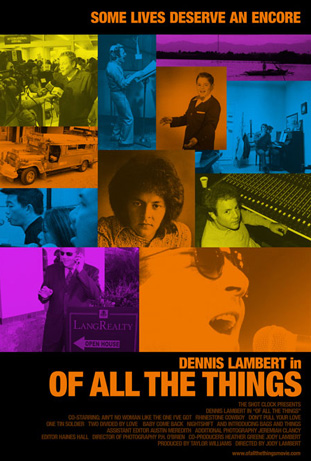
Dennis is also the subject of an award-winning 2009 feature documentary titled "Of All The Things."  
"It’s the most unlikely comeback of the year.  Dennis Lambert was one of the most successful and diverse songwriter/producers of the 70’s and 80’s.  Today, he’s a 60-year-old family man selling real estate in Florida.  But it turns out his obscure 1972 solo album Bags and Things is huge – in the Philippines.  A Filipino concert promoter has been begging Dennis to tour for decades, and in 2007 he finally agreed.  Of All the Things is a hilarious, touching and winning pop/rock/country/R&B documentary that follows Dennis on his whirlwind tour as he rediscovers his passion for music – a two-week adventure that takes him from the comforts of Boca Raton to a sold-out show at Manila’s famous Araneta Coliseum for thousands of fans he never knew he had.  Some lives deserve and encore, indeed." -- collider.com
I've yet to see this film, but after reading that synopsis, it's at the top of my list.

Without Further ado, here's my Q&A with Dennis:

1 - Did you know what the treasure was going to be when you started writing or was it something that evolved?

Dennis Lambert:  I had a general idea that we would attempt to tell a story about the futility of war and use a fable-like device for its style.  The specific “treasure” was a revelation somewhere in the process.


2 - Wikipedia claims that the chord progression of OTS's verses is based on Pachelbel's Canon. True? If so, intentional?

DL:  It is not an uncommon chord progression and I would think there are many songs that have a similar feeling using parts of Pachelbel’s Canon.  It was not intentional on my part to use that piece.


3 - Did you write OTS specifically for the band The Original Caste or was it something you had in your back pocket when you started working with them?

DL:  We wrote it for them specifically having signed them to our label, TA Records.  Since they were a folk-rock based band, it was a good fit, assuming they would like the song.  Needless to say, they did.


4 - Many famous songwriting teams consist of a lyricist and a composer. But you and Brian Potter both did words and music. What was the process like when you wrote OTS?

DL:  A lot of songwriting teams from the '60s era forward consisted of people who would sit in a room together and hammer out a song.  While generally speaking, someone did more of one thing than the other (I play piano, Brian Potter does not), there were contributions from both of us across the musical and lyrical spectrum.


5 - I really like your own version of OTS, performed at Joe's Pub in 2008. Why did you choose to do the song in a slower, more soulful and understated manner than in the versions by The Original Caste, Coven, Cher, etc?

DL:  I feel like the song deserves to be heard in a more plaintive and intimate way.  The story is important if you can pick up on the nuances. Doing it more slowly and “naked” is a way for that to really come across.


6 - I won't ask you to pick a favorite version of OTS, but what was the most interesting/surprising version you've heard - or maybe one that's under appreciated?

DL:  Roseanne Barr’s ridiculous version made me roar with laughter.  The Original Caste’s version is still my favorite.


7 - A number of anti-war songs songs got radio play during the Vietnam War, many of which have faded into obscurity. Why do you think OTS has endured?

DL:  Because it’s fabulous???  Ha Ha…just kidding.  I think it has a lot to do with the fact that most of the fans were between 6-16 in 1970 (they are now 50-66) when they saw Billy Jack and heard the song for the first time.  It became and remains a major campfire song, spiritual hymn albeit a lite one, and a favorite of that generation of young people, particularly girls.

http://www.ofallthethingsmovie.com/

We'll Have a Dance of Liberty

"Black and White" - Three Dog Night (Jimmy Greenspoon) 

In 1954, the Supreme Court declared racially segregated schools unconstitutional, inspiring a song titled "Black and White," music by singer Earl Robinson and lyrics by David Arkin (father of actor Alan Arkin).  17 years later, the band Greyhound reached #6 on the British pop charts with their version of the song.  An American band heard this single and recorded the song for its next album.

Who was the band?  Obviously, it was Three Dog Night, who took it to #1 in America in September of 1972.  


TDN is an underrated band and an unusual one.  It featured three lead singers, so perhaps this lack of a solitary front man like a Jagger or Cobain made it harder for fans to focus their attention (the Beatles, as usual, being the exception to this theory). But TDN had three #1 singles and 21 (!) Top 40 hits between 1969 and 1975.

On the one hand, despite a five year break in the late 70's, the band has been remarkably durable, continuing to play together with most of the original lineup.  On the other, they haven't released a new album since... 1976!

But the most likely reason they are not in the hip pantheon of rock groups is that they were unabashedly pop rock.  Many of their songs are perfect for singing along to in the car or at the arena.  They weren't dark and edgy and experimental.  They didn't write most of their hits.  But they were very capable musicians who had a fantastic knack for picking songs, many from writer/performers who went on to become successful in their own right.

One (Harry Nilsson) - is the loneliest number.
Mama Told Me Not To Come (Randy Newman)
Eli's Coming (Laura Nyro)
Never Been to Spain (Hoyt Axton)
Joy To The World (Axton) - "Jeremiah was a bullfrog," not the Xmas song.
An Old Fashioned Love Song (Paul Williams)
Sure As I'm Sitting Here (John Hiatt)
Shambala
Celebrate
The Show Must Go On
Liar
And so on...


One of the band's original members, Keyboardist Jimmy Greenspoon, shared his memories and insight with me.  If you want more than the seven questions and answers below, he also wrote a book with a very long title: 


One Is the Loneliest Number: On the Road and Behind the Scenes With the Legendary Rock Band Three Dog Night


1 - I've read that TDN heard the UK reggae band Greyhound's recording of B&W and covered that version. But B&W was originally recorded in 1956 by Pete Seeger and then by Sammy Davis, Jr. in 1957. Were you familiar with either of those versions?

Jimmy Greenspoon: I wasn't aware of the other versions. I knew there were some out there as it was written some time ago. The Greyhound  version was what we used for a template.

GREYHOUND

PETE SEEGER

2 - I assume that's you playing the famous piano intro?  How was it decided to start the record off that way?

JG: Yes, that's me. It was a running joke that I started 99% of the songs, so as on "JOY", "MAMA", "OLD FASHIONED" and others, the guys took a dinner break and left me to come up with something that was radio friendly. TA DA!

3 - Was there any negative reaction to the song from people who disagreed with its meaning or didn't think it should be commercialized, etc?

JG: None at all. In fact, some school teachers in the deep South used the song as a learning tool for the children.

4 - When you finished recording the song, did you think it was going to be a hit?

JG: Yes. At that point, our track record was extensive, so we knew we had a hit on our hands.

5 - How has the social context for the song changed, given that you and the band have been performing it for 40 years?

JG: The context of the song remains intact to this day. There's still people out there who don't want that equality, but you can't fix stupid. Most people at the shows just view it as a fun, sing along hit.

6 - What was the most memorable live performance of B&W?

JG: The one that never happened. We were scheduled to play South Africa at Sun City, but someone on the other side didn't do their homework. When they found out that Floyd was black (DUH) they cancelled the show. That would have been quite the learning experience.


Drummer Floyd Sneed and the rest of the band


7 - Who are the children singing towards the end of the record?

JG: The kids at the end were Cory's daughters (Cory Wells is one of TDN's lead vocalists), Floyd's daughters, my daughter and some of their school friends.


I Hardly Know What to Say

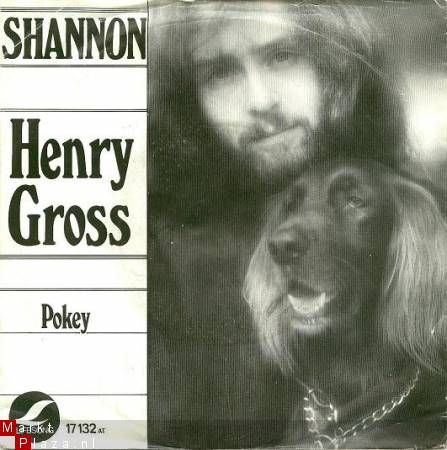
Shannon - Henry Gross

The early 1970's saw the rise of the "sensitive male" singer-songwriter, from James Taylor to Jim Croce, Cat Stevens to Paul Simon. From its beginnings in acoustic folk music, this genre evolved into a radio friendly form that was immensely popular at the time and remains a favorite for many a Baby Boomer.  What it lacks in edge and hipness it makes up for in melody, heart and facial hair.   Like any style, it generated a lot of forgettable songs, but also a number of classics that have endured.  Such is Henry Gross's #6 hit from 1976, "Shannon."


Event though the lyrics never specify who/what Shannon is, it became common knowledge that the song is about losing a beloved dog.  That subject resonated deeply with listeners who could relate to the difficulty of such a life event - and the deal was sealed by a memorable melody, heartfelt vocals, and lush production.


Though he is best known for singing a song so sincere that it's taken a fair amount of guff for being "corny," Henry has a great sense of humor, as evidenced in many of his other songs as well as in his answers to my questions about "Shannon" below.

Hurry, Don't Be Late

Reminiscing - Little River Band


There are songs that, whenever you hear them, keep popping into your head at random times for the next few days.  I'm not talking about an earworm, which is a short musical hook that you just can't shake.  I mean bits and pieces from an entire song flit in and out of your consciousness.

In some cases, this sonic stickiness is annoying; in other instances, it's like welcoming an old friend for a weekend visit.  The latter is definitely true for me whenever I hear "Reminiscing," a song from Australia's Little River Band that was composed by the group's Graeham Goble (pictured above).  Evidently I'm not alone in my fondness for this romantic tune, as it's been played on American radio more than 5,200,000 times since it reached #3 on the pop charts in 1978.  

(A word to the wise: the group that currently performs as Little River Band has NONE of the original members, not Graeham or any of the others who recorded "Reminiscing."  It's a case of what unfortunately happens too often, where the rights to a group's name ends up with someone other than  the musicians who made it a success.)

Graeham kindly agreed to answer my questions about "Reminiscing" and then followed up with a recommendation for a contemporary artist whom he finds very much worth a listen.  Who is it?  Read on for the answer.

I got the notion

(It's So) Nice To Be With You - Gallery

Comedies rarely win the Academy Award for Best Picture, which is a shame.  Evidently, some people feel only "serious" works of art are worth rewarding.  In pop music, sometimes songs that are simply fun and cheerful get short shrift, but how often have you chased the blues away by listening to a happy song?  If you're anything like me, many times.  There is great value in that.  No guiltiness in that pleasure.

"(It's so) Nice to be With You" by Gallery hit #4 on the charts in 1972.  The band had two other Top 40 hits in the next year or so... and that was it.  What I like about this single is its purity - the title really says it all.  The lyrics don't get any deeper than that, the melody is lively and very singable.  Pure pop.  Perfect for singing along to with the windows on the car rolled down on a spring day.

The 70s were the last heyday for happy pop songs.  Soon enough, punk and new wave and hip hop and grunge and more would come along - all great genres, to be sure, but something's lost but something's gained...


I reached out to Jim Gold, the singer and writer of "(It's so) Nice to be With You" and his answers to my seven questions appear below the jump: