Showing posts with label 2010s. Show all posts

She Hadn't Even Begun To Sully

BILLIONS OF EYES - Lady Lamb


Songs are like people.  Some you just never take a shine to.  Some grow on you over time.  Some infatuate initially before fading quickly as you tire of the very thing that attracted you in the first place.

And then there is true love at first sight... or first listen.  You immediately know it's a great match and as time passes the bond only grows deeper and deeper.

"Billions of Eyes" was love at first stream for me.  If you haven't heard the song yet, take a listen:


I don't want to oversell. I'm not claiming BofE is a genre-defining song that will go down in history with "She Loves You" or "Smells Like Teen Spirit."  But it's a very good recording that really resonates with me, for whatever reason.  Lady Lamb's voice, the sound of her guitar, the energy, the lyrics that flow like a stream of consciousness yet reveal themselves to be anything but random.

Take this little snippet:
I could tell the story of howMy great grandmothers' sister was deemed a saint
how they exhumed her body after years of being buried
and they found she hadn't even begun to sully
so they moved her again, straight into the Vatican 
Initially, I assumed LL was just spinning a colorful yarn... but it turns out it's a true story.

I first heard BofE on a recent music sampler from Landmark Theatres.  There are other good songs on the sampler, but Lady Lamb's track grabbed me by the ears and made me listen to it over and over. 

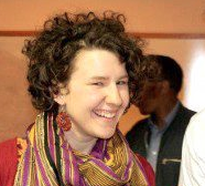
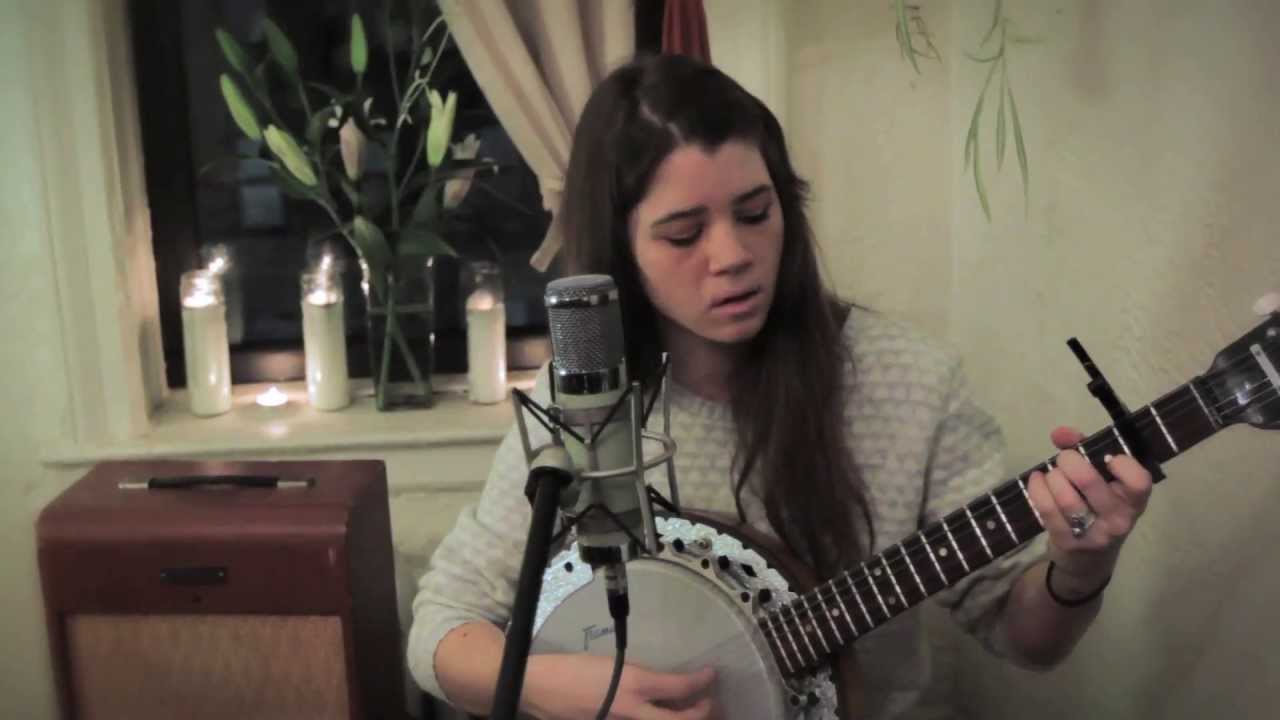
Who is Lady Lamb? She's otherwise known as Aly Spaltro, a singer/songwriter/musician from Maine who is now based out of Brooklyn.  Initially known as Lady Lamb the Beekeeper, she wrote and recorded songs after hours at the video store where she worked, self-releasing her music from 2007-2012. 

Ba Da Bing Records released her album "Ripely Pine" in 2013.  And earlier this year, Mom and Pop Music released "Always," which includes BofE.  Lady Lamb is on tour now, but she took time out to answer a few questions (below).


1 - Which came first, the words or the music - or did they evolve together as you wrote "Billions of Eyes"?

Lady Lamb: The words came first, with the drum beat to follow. 


2 - The mesmerizing official video for BofE says "Made by Aly Spaltro."  What was it like to come up with the concept, gather the home movies and other materials that you used, and put it all together? 


LL: I decided to make the lyric video with only two days before the song was coming out, so it was a bit of a whirlwind. My dad had just started digitizing old home videos from the early 90s so it was perfect timing that I was able to incorporate those into the video. I had also been collecting cutouts from my own magazine collection, and was able to incorporate some cutouts mailed in to me by fans. I love to edit and make movies, so it was a really fun project, and busy weekend!


3 - How did you -- and this song in particular -- end up being chosen by Landmark Theaters for their recent free music sampler?

LL: Honestly, I’m not sure exactly why it was chosen, but I’m certainly glad it was!


4 - The song refers to the small joy of barely making it aboard a train in time.  Do you have any memorable close calls, good or bad, when it comes to making a train?

LL: Living in NY, this happens to me all the time, maybe 1 in 5 times I board the subway. The close calls always bring about a small, nice acknowledgement by strangers and I love that.


5 - How did you create the jangly guitar tone used on this record?

 
LL: The majority of the guitars in the final version of the song were recorded in my bedroom using a Fender Jazzmaster and some mild effects of reverb and treble.


6 - BofE's lyrics have a poetic quality and could be described as impressionistic. Are you ever surprised at people's interpretations of the song or any of its lyrics?

 
LL: Most people I talk to really connect to the line about just wanting to fall into a pile of warm laundry when they are tired or frustrated. I really appreciate how many people get that line and agree!

7 - You're on tour now.  When we hear BofE live do you think you'll tend to stick fairly close to the recorded version?


LL: We stick pretty close to my recorded version, but the song is full of energy and we bring that live.


Where has your father gone?

Vdova - The Nightingale Trio

The term "World Music" is so broad that it borders on silly.  Generally, anything that isn't English language pop or Western classical music can be and has been categorized as such.  Cuban jazz, Algerian rai, Polynesian drumming, Brazilian salsa, J-pop, klezmer, Celtic, Cajun... the list is endless.

Whether or not it makes sense to combine all these diverse and rich genres under one heading is debatable.  There's no denying, however, that expanding your musical horizons beyond the Top 40 opens up worlds of rhythm, melody, harmony and instrumentation you never even knew existed.

Nowadays it's easy to explore this cornucopia.  You can wander down a million musical rabbit holes online and listen to any type of song, any time, any where.

It hasn't alway been thus.  A generation ago, if you lived in an area that had a public radio station, you occasionally might have heard World Music.  Your library may have had a few records.  Or perhaps you'd read a review somewhere that opened your eyes and ears.

I don't recall how I came across the following album, which I bought on cassette...      


...but it was one of of the most strikingly distinct things I had ever heard.  While the acapella woman's voices had echoes of familiar religious music, the tone and (especially) the harmonies were strange. Strange and beautiful.  I loved it immediately.


"Le Mystere des Voix Bulgares" ("The Mystery of Bulgarian Voices") is a collection of folk songs by the Bulgarian State Radio and Television Female Vocal Choir.  The album was released in the US in 1987 and three years later the group's second album won a Grammy.

Fast forward to this year, when I was deep in one of the musical rabbit holes I mentioned above.  I came across a video shot under frozen Minnehaha Falls in Minneapolis.  That alone was enough to enticement me.

To my delight, the music was as wonderful as the setting.


It turns out the Nightingale Trio is a unique act, one inspired by the folk songs of the Balkans and Eastern Europe (such as "Le Mystere des Voix Bulgare").  While remaining true to the music's traditions, the trio also brings a unique approach to this type of singing.

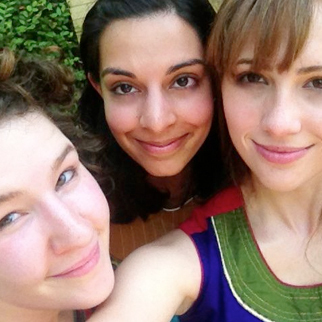
Sarah Larsson, Nila Bala, and Rachel LaViola met at Yale as members of the Women's Slavic Chorus.  Now based in Minneapolis, San Jose, and Dallas, respectively, they continue to perform together.

You can learn more about the three of them and their music at nightingaletrio, facebook.com/TheNightingaleTrio and thenightingaletrio.bandcamp.com

I had the chance to ask Sarah and Nila about recording "Vdova."
1 -  As a teenager, I enjoyed exploring underneath/behind Minnehaha Falls, which may or may not have been permitted.  What was it like singing in this unique environment and why was it chosen?
Sarah Larsson: Why we chose that spot: We had already filmed another video with Trent Waterman from North Shore Sessions, and we loved his work.  We contacted him about filming another video, with our thought being, “Something haunting, beautiful, still—like winter.”  

His first suggestion was the Falls!  Since I live in Minneapolis, I had actually explored back there before, and knew it would be magical.  Actually, the first time I climbed back there, I was by myself, and I couldn’t help but sing.  The cavern makes a beautiful acoustic space.

2 - The trio includes a Minnesotan, a Texan and a Californian.  Did the cold winter air affect your voices, particularly for the two of you coming from warmer climes?
SLTotally!  You can’t tell in the video, but I was moments away from drooling almost the entire time.  Trent, the videographer, took off his gloves to do the filming, and we were completely impressed at his fortitude.  In the cave, the air was a little warmer than the air outside, but we still happened to be singing in Minnesota during the coldest weekend on record — the “polar vortex”, if you remember!

Nila Bala: Cold weather is definitely something we have to watch out for.  We like to keep warm water or tea close by, and cough drops to counteract the cold.  Since we didn't have to do too many takes for Vdova, our voices survived the adventure!
3 - "Vdova" is a sad song about a woman learning that her husband has been killed, his body scattered by ravens. Since most of your listeners are unlikely to understand Ukrainian, how much is your song choice dictated by "sounds amazing" and how much by "great lyrics"?
NBI think its hard to separate the "sounds amazing" from the "great lyrics," since the meaning of the song drives the sound and the way it is rendered.  It is important for us to know the meanings of the songs, so we can imbibe the songs with that feeling, even if our listeners may not understand Ukrainian. 


Sarah Larsson

SLMost of our first impressions about songs are based on the harmonies and aesthetics, sound-wise.  Pretty often, we find out about the meaning of a song in a general way at first, and don’t get literal translations until we are already performing the songs and meet a native speaker.  Other times, we learn the songs directly from a master-singer, who tells us all the song’s background right away.  

For this one, we knew it was a widow’s song from the start, and we hope that the sorrow in the song comes through just through the feeling in the tune.  

In any case, so so many of the songs are about the stark, real, often-desperate calling-out of women in the old country.  Other songs say, “Mother, oh please do not marry me off; I will forever miss my friends and my little garden.”  Somehow, we love these sorrowful stories, too.  Other songs, of course, are as joyful as can be.
4 - Do you sing this any differently than would a traditional group of Ukrainian women?
SLYes, our style is very different.  Traditional folk Ukrainian is a bit more brash, and “forward”, to use the language of vocal production.  It varies a lot region to region, but here is an example that is pretty typical of what we have heard: http://www.youtube.com/watch?v=wAfBO9vMwt4.  

Our style is different, but we have grown into our style through being really focused on listening in to each other, and letting our harmonies ring.  

Ukraine is, admittedly, one of the nations whose music we know least about.  We’ve studied with master singers from Bulgaria, Croatia, Serbia, Bosnia, and Russia, but not yet Ukraine.  

Also, it’s interesting to note that we each have very different singing backgrounds.  Nila was trained in classical South Indian music, and also performed in touring Broadway shows as a child.  Rachel has no formal music training, but is also a phenomenal country and bluegrass singer.  I had most of my vocal training in a classical Western women’s choir, and I’ve also studied music of several West and East African traditions.  We all come together!

NBWe try our best to sing Slavic music as authentically as we can--meaning the pronunciation, the vocal placement, and the tone.  However, we are not fluent in the languages we sing in, nor is it the only type of music we enjoy, so you are likely to notice some differences. 

If you listen to traditional Ukrainian women's groups, you might find that they have an even louder, fuller, tone, with a heavier vibrato than we use.  However, even within Ukrainian voices you will likely notice differences, since every vocal group makes different stylistic choices.


Nila Bala
5 - The three of you live in different places, so singing together live is not always an option.  Do you ever rehearse a song like "Vdova" via Skype or other digital technology?
NBFor now, electronic rehearsals are not a good option given the feedback and delays that occur.  We tend to learn our parts very well on our own, and then come together before our tours to put our songs together.

SLWe have tried to use Google hangouts, but the problem is that the program mutes your microphone while anyone else is talking!  So no, that doesn’t work for us.  What we do instead is have our hangouts to plan tours and repertoire, and then we all go home and learn our parts on our own.  We convene for an afternoon before our gigs start for each tour and put everything together.  We’re constantly emailing back and forth with new music ideas.


Rachel LaViola

6 - The video was produced for the North Shore Sessions.  What are they and how did the Nightingale Trio get involved?
SL: North Shore Sessions is an awesome project based in Minnesota, that films local and touring bands playing in interesting spaces.  Most of the videos they film are taken in one single shot without cuts, so they have a great live feel.  

I learned about it because Trent Waterman filmed videos of several musician friends here in town (The Hummingbirds: http://www.youtube.com/watch?v=AREG8tX04bU and Lynn O’Brien: http://www.youtube.com/watch?v=lzs1UgXACpA).  Trent is also a good friend. 

There are a lot of amazing local artists in Minneapolis-St. Paul, and Trent does all of his filming just out of his own artistic passion for good music and for film.
7 - Did you nail this video on the first take?
SLWe did about 5 takes of this song, but I think this version is maybe the 3rd or 4th one.  It took us a moment to get into singing mode after climbing up an ice covered waterfall (!), and then we needed a bit of time to get the sound right. Fun detail: we recruited some strangers who were also exploring that day to guard the entrance to the cave, so no one would walk into the shot.  


I Want To Feel What You Feel

"Love Belongs Right Here" - Mary Hopkin

One of the first artists the Beatles signed when they launched Apple Records in 1968 was a young Welsh singer named Mary Hopkin.  

The first commercial single the label released, Apple #2, was Hopkin's "Those Were The Days."  Produced by Paul McCartney, the record became a huge international hit and made Hopkin a star. 

Hopkin's next single was a McCartney original, "Goodbye," a #2 hit in the UK and #13 in the U.S.  Prime Paul, its catchy melody is a perfect match for Hopkin's lilting vocals.

(Apple single #1, by the way, was a private pressing of Frank Sinatra (!) singing a revised "The Lady is a Tramp" for Ringo's wife, Maureen.)  

Goodbye


Credit: Morgan Visconti


Mary Hopkin has been involved in various music and theatrical projects in the years since, from the Blade Runner soundtrack to the theme song for a Billy Connolly TV series, working with myriad artists from David Bowie to Dolly Parton to the Chieftains. 


Credit: Morgan Visconit


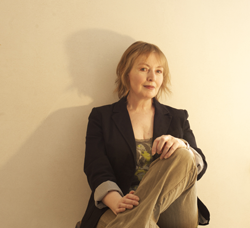
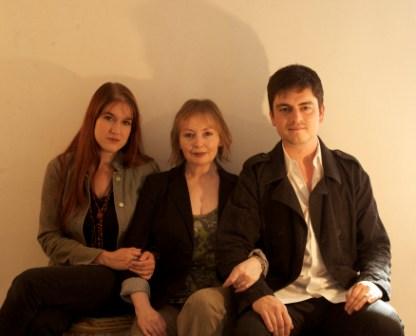
Hopkin's children, Jessica Lee Morgan and Morgan Visconti, share her musical talents and she has collaborated with both.


My impression, right or wrong, is that she has never seemed commercially motivated, that she is driven instead by a love of singing. Hopkin doesn't do much press or perform publicly often, but she's no recluse - she tweets regularly (@themaryhopkin) and has a nice website (www.maryhopkin.com).  And she continues to grace us with new recordings.

Her most recent album, "Painting by Numbers," concludes with a powerful yet intimate song, "Love Belongs Right Here": 


 I sent Hopkin seven questions about LBRH.  She quite kindly responds:

1 - You wrote LBRH with your longtime guitarist Brian Willoughby for a solo album he released in 1998. What was that process like?

Mary Hopkin: Brian had already written a lovely 8-bar melody on guitar, which we used for the verses. Once we'd worked out the chords for the rest of the song, I wrote the remaining melody and lyrics.

2 - The only instruments on the track are two guitars, one electric and one acoustic. Is that Brian and/or you?

MH: I wish! Brian played all the guitar parts - beautifully. I just played the keyboard pad.

3 - On LBRH (as well as the rest of "Painting by Numbers") your voice is as beautiful and distinctive as it was when you signed with Apple records in 1968. What's your secret?

MH: Thank you - it must be neglect! I prefer my voice now, though - my range has improved and it seems to reflect more of what I'm feeling.

4 - Have you ever tried singing LBRH in Welsh?

MH: No, but there is a translation and it has been sung by the lovely Welsh singer, Heather Jones.


5 - Did you do anything special to get in the right mood to record the vocal for LBRH or do you just start singing and the emotion comes easily?

MH: What are you suggesting? Have you heard the lyrics? :-) No, no foreplay necessary - I'm a professional :-)

6 - Was it easy to keep the arrangement simple or were you ever tempted to add strings, bass, percussion, etc?


MH: Brian's whole album (Black and White) was beautifully understated - in fact, he didn't use the electric guitar part on his album version. A big arrangement would have affected the intimacy of the song - although we did think of pitching it to Celine Dion :-)

7 - Why did you decide to end the album with LBRH?

MH: I chose it as the last track because it's the only song that is not a demo, but a finished recording. I also like the way the slow fade leads the listener gently into silence.


Musical Chemistry

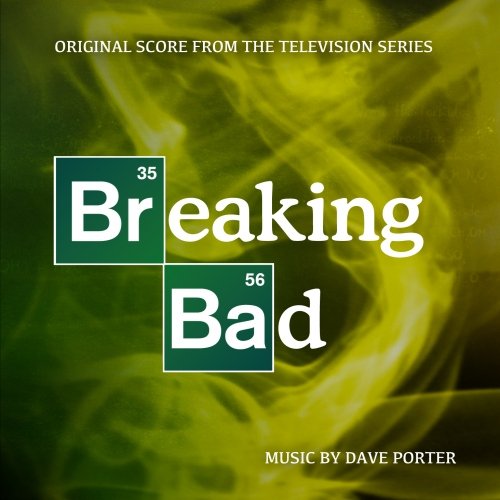
"Breaking Bad" (TV series) - Dave Porter


As it builds to its highly anticipated finale, "Breaking Bad" is widely hailed as one of the finest television series of all time.  What elevates this drama is the excellence with which every element is crafted: the acting, writing, directing and cinematography are the most obvious examples.

But don't overlook Dave Porter's masterful work scoring each and every episode.


Great scores in film and television come in two flavors: those that call attention to themselves and those that you don't often notice. Both types are equally effective in the right hands and in the right context.  John Williams' classic score for Star Wars is something anyone can hum - its grandiosity and power match the scale of an intergalactic battle between good and evil.

Showy scores like Williams' tend to get the most attention. And people also notice music when it's bad - heavy handed or repetitive or incongruous. 

But music that people don't consciously notice, even while it ties together scenes and amplifies emotion, music that would be sorely missed if it disappeared? That is the work of a very talented individual.


Dave Porter's work on "Breaking Bad" falls in this category.  Not to say that you never notice his score, because you do.  But on the whole it directs attention not to itself but keeps it on the story, where it belongs.  It never takes you out of the moment. It never hits you over the head to tell you THIS IS SCARY or THIS IS FUNNY or THIS IS SAD.  It's subtly perfect.

Because the characters have evolved so much over five seasons, Porter is always coming up with new music.  He isn't just coming up with a handful of great themes to reuse and tweak, he's constantly creating a new soundscape.

His work here is also distinctive for its lack of standard orchestral instruments. Instead, he features electronic sounds and ethnic instruments, as well as acoustic guitar and found sounds that aren't created by a musical instrument. 

And in this day of short title sequences, Porter came up with that memorable dobro and percussion theme that punctuates every cold open and primes the viewer for an hour of gut wrenching suspense.


1 - What is your favorite score for a television series and how has it influenced your work on Breaking Bad?

Dave Porter: As a whole, I'm probably more influenced by film scores than those from television, although there have been a some important exceptions.  When I was 14 years old it would have been hard to drag me away from Miami Vice on a Friday night…  Michael Mann and Jan Hammer used music in a very aggressive and overt way that hadn't happened previously on TV.  Certainly Twin Peaks is another - the way that David Lynch has always melded music and sound design has been a big influence on my own work.

(Editor's note: Once, as an icebreaker, my colleagues and I had to name our favorite TV theme songs. I said "Twin Peaks" and none of my two dozen co-workers knew the song - and we worked at a television network! Here it is in all its beautiful and mysterious glory. A TV theme would never be allowed to run this long nowadays.)  


2 - Since, sadly but inevitably, BB is ending, what will you be working on next?

DP: I'm very excited about my next project, which will be a series for Fox entitled "Wayward Pines."  It is being produced by M. Night Shyamalan, who will also direct the first episode. Chad Hodge and Donald DeLine are also executive producers, and the cast they have lined up is fantastic: Matt Dillon, Terence Howard, Melissa Leo, Juliette Lewis, and more.  It is a thriller that is expected to air next summer.


3 - When a song is used in an episode of BB, such as Jim White's "Wordmule," is it added to the sound mix before, after or during your scoring, and do you ever consult with the music supervisor about what songs get used?

DP: All of the music, additional sound effects, dialogue fixes, etc., get mixed together in the final audio mix, which is generally the last step in the creative process of a film or television episode.  Most films and tv shows have a music supervisor in addition to a composer, and that person is responsible for the licensed music that is used.  In our case, that job is handled by Thomas Golubic and his staff, who do an amazing job.

I do coordinate with Thomas (and of course Vince Gilligan and other writers/producers) about where music should be used, and if we are going to use music in a particular scene whether it should be source or score.

If we decide source (aka licensed) music is the best option, then creatively that task falls to Thomas.  On a few occasions we've been unsure whether score or source would be the best option, and we've both worked on music for a scene, in which case Vince Gilligan would make the final decision.


4 - You've been very accessible to BB fans on Reddit and Facebook, etc.  Is using social media a must for a career in music or simply something you enjoy doing? 

DP: This is an interesting question, and one that I don't think I fully know the answer to yet.  I'm not sure that being available on social media is really anything that is likely to further my career… at least I don't see it that way.  But I guess you never know -- it certainly can't hurt to have people be aware of your work.  

For me, I started doing those things because I had an inside view on a unique television show that people were eager to talk about.  In the beginning, in particular,  it was fascinating to connect with fans who were early adopters and as passionate about the show as we were.  As the show grew in popularity I used these social networks as an interesting gauge of where we were during the crazy ascent of the show into the popular series it has become.  

As my career moves on beyond Breaking Bad it will be interesting for me to see what role social media plays.


5 - How did you select which tracks to include on the soundtrack album, given more than four season's worth of material, especially since your music for the series is not just a collection of themes and stings?

DP: Selecting cues to include on my score soundtrack CD was definitely tough.  My view is that as a film/tv composer my task first and foremost is to create music that supports the film or show.  I'm never thinking about what something is going to sound like on a soundtrack record when I'm writing it.  

But of course listening to a soundtrack record is a very different experience, with different requirements and expectations.  I really wanted listening to the score soundtrack to be a cohesive experience, but this meant, for example, that some of my favorite cues didn't make it simply because they felt too short and there wasn't time or budget to rerecord them.  

Overall it was a very rewarding experience, though, and I'm really pleased to have the score soundtrack available for those fans that are interested.

6 - What was the hardest episode to score?

DP: From a purely logistical standpoint, last summer's "Dead Freight" with the train heist sequence was the most demanding.  Previously, I think the longest cue I had written for the show was around 4 minutes long.  The train heist cue lasts almost the entirety of the final act, approximately 13 minutes.  For any composer working on an extended action sequence, it is a lot of work to keep the music varied and follow all the peaks and valleys across a long stretch of time.  

From an emotional standpoint, my "Jane's Demise" cue was probably the hardest.  That was not only a very difficult scene to have to watch hundreds of times, but a very complicated series of emotions and reactions that had to be accounted for musically without necessarily commenting on the scene from a moral standpoint.  That particular cue had many incarnations before arriving at exactly the right one. 


7 - Showrunner Vince Gilligan and editor Kelley Dixon are always quick to praise your work.  Will you be on any of their podcasts this season

DP: Our official podcasts, which Vince and Kelley put out for every episode, are an amazing source of insider info on the show.  I highly recommend them for fans of the show.  I always love attending them because without fail I'm also learning all kinds of new things that I never knew.  

I have been a part of a number of them, and I'm honestly not sure if I will be a part of any this final season… they tend to be a last minute thing.  I have, though, recorded DVD commentary on a few episodes already, which are always fun as well.

Sometimes It Hurts Instead

"Someone Like You" (Adele) - Dan Wilson, co-writer/co-producer

What is the greatest post-Y2K pop song?  And, by the way, doesn't the term "Y2K" sound completely archaic now?

Yes, trying to crown a song as "greatest" in any way is a silly endeavor.  It's completely subjective.  The alternative is to use numbers: most sales/radio play, for instance.  And what does that really tell us?  

But people love to rank things.  College football teams, hamburgers, or sitcoms, the question of which is best cannot be resolved - but it can lead to endless hours of argument which, when done right, is entertaining and enlightening.

So let me ask again: what is the greatest pop song since 1/1/2000?

To me, to truly achieve greatness a song must become ubiquitous, so much so that even people who never intentionally listen to music know it.  After all, "pop" is short for "popular."

The trick is to create such a song without making it so vanilla that everyone finds it listenable but few find it essential.  And the biggest challenge of all is that even the most brilliant songs can become grating after a while, when you've heard it for the zillionth time in the last month.

So, off the top of my head, my short list of mega-hits this century would include songs like "Poker Face" by Lady Gaga; "F*** You" by Cee Lo Green; "Hey Ya" by Outkast; "Call Me Maybe" by Carly Rae Jepson; "Put a Ring on it" by Beyonce; "I Kissed a Girl" by Kate Perry; "Gagnam Style" by Psy; "Viva la Vida" by Coldplay; "Get Lucky" by Daft Punk; and "You Belong to Me," by Taylor Swift.

There are certainly other songs that merit mention with those above. When I think of the last decade or so, this is the music that jumps out at me.  But one song that rises above them all: Adele's "Someone Like You."  

Like all timeless performances, it sounds fresh yet familiar.  The arrangement is elegant. Adele's vocal is so powerful that it feels like it's coming from your heart, not hers.  And love lost is perhaps the most universal of themes. 


Dan Wilson co-wrote and co-produced "SLY" with Adele.  He is a popular artist in his own right, from his days with Trip Shakespeare and Semisonic ("Closing Time," speaking of ubiquitous songs) to his current solo work.  He's a talented painted, has won Grammy Awards, and has co-written songs with everyone from Keith Urban to Weezer, Josh Groban to Nicole Atkins, John Legend to the Dixie Chicks ("Not Ready to Make Nice," anyone?).


You can read more about him at his excellent website.  Follow him on Facebook and Twitter. Sign up for his mailing list and get free songs.

Dan kindly took time to answer my questions about his work on "Someone Like You."

1 - The song was inspired by Adele's ex's engagement.  How developed were the lyrics and music when you started co-writing and what did you bring to her process?

Dan Wilson: What Adele showed me at the beginning of our session was four lines of the first verse along with a cool single-note guitar part. It may be that she had some other ideas in her back pocket, because when we wrote the music for the chorus, she ran to the other room and came back very quickly withe the first half of the chorus. The rest of the song was hard work, she took the lead a lot with lyrics and I mostly helped with music and the structure of the song. I think I occasionally suggested better ways to phrase the lyrics.

2 - I read recently that the record label wanted to re-record SLY because it was too sparse and slow.  That blows my mind, as the utter simplicity of voice and piano is the perfect setting for a song as intimate and raw as this one.  How did you and Adele decided on this arrangement?

DW: I guess they did two alternate versions. I heard one, it had a beautiful string arrangement. They tried other versions partly because the recording you hear was thought of as the "songwriting demo." Everyone loved it the minute they heard it, but the team took some pains trying to beat it with a more complete version.

3 - I was going to ask if you worry about using a title that's been used before, thinking that Rod Stewart had a hit with "Someone Like You," before it dawned on me that this is simply a phrase used in his song titled "Reason to Believe" (which, ironically, is a title Bruce Springsteen later recycled).  If that makes sense.   So the actual question is: did you sweat the title for SLY much or was it fairly obvious all along what it would be?

DW: Actually, I didn't know what the title should be when we finished the song, and I asked Adele what she thought. "Someone Like You" was her best guess at the time and it just stuck. I'm not picky about song titles, I don't think you need to be original in naming children, nor in naming songs.


4 - Not many songs become iconic enough to inspire a Saturday Night Live sketch. Assuming you've seen it, how did it make you feel to see the ribbing of SLY's ability to jerk tears?

DW: That was one of the greatest honors of my musical life!


5 - You have been successful writing and co-writing for numerous artists in disparate genres, from country to rock to pop.  What is it you think Adele was looking for from you, specifically?

DW: I think Adele wasn't sure what I would bring to the session. Rick Rubin had been urging her to write with me, and she loved the Dixie Chicks songs I'd written with the band, so maybe she thought she'd get a little more American twang into whatever we did together.

6 - You play the piano on the song.  Did you record live to vocal or as a separate track?

DW: We recorded the piano first, I played to a click track and every time it seemed like it should slow down or speed up, I had the engineer, Phil Allen, create a little accelerando or rallentando in the click track, then played over that. Then we worked on the vocals second.


7 - SLY was voted the 3rd most popular single in the UK in the last 60 years, trailing only MJ's "Billie Jean" at #2 and Queen's "Bohemian Rhapsody" at #1.  Which of those two songs do you prefer?

DW: I love "Bohemian Rhapsody" and listen to it a lot. I'm indifferent to "Billie Jean," I don't like the self-pitying vibe of that song. MJ did a lot better songs than that.