Showing posts with label television. Show all posts

Let The World All Think What They Will

NO ONE HAS TO KNOW (from "The Marvelous Mrs. Maisel") 

Lyricist Tom Mizer

I interviewed the funny, frank and insightful Thomas Mizer about "No One has to Know," one of the songs he and composer Curtis Moore have written for the Amazon series "The Marvelous Mrs. Maisel." Even if you aren't a fan of the show (though why wouldn't you be?), you have to be impressed by the production values.  The art department, costumers, hair stylists and others recreate the late '50s and early '60s in amazing detail.  Perhaps the most difficult challenge in this regard is the creation of original songs, which falls to Mizer and Moore. 

The producers could have used existing songs from that era - say a Johnny Mathis hit - but chose to use new music instead. When a character in the series is a historical figure, such as comedian Lenny Bruce, their actual material can be used.  When a character is fictional, such as the titular Mrs. Maisel, the writers have to come up with an original act authentic enough to make us believe it would have been fresh and funny fifty years ago.
 
So it is with Shy Baldwin, the popular singer who plays a key role in the third season of "The Marvelous Mrs. Maisel." While he calls to mind a few vocalists from that era, he is not just a copy or an homage, he is a unique and complex fictional character.  How do you write a song that not only sounds like it's from that time, but also is good enough to have been a hit? On top of that tall order, you also have to use it to advance a major plot point?
 
"No One Has to Know"

The show's creator and executive producer, Amy Sherman-Palladino, wisely turned to Mizer and Moore, the award-winning duo who write songs for stage and screen.  Thomas is the lyricist, Curtis the composer.  Their efforts for the series have been recognized this year with an “Outstanding Original Music and Lyrics” Emmy nomination for another Shy Baldwin song, “One Less Angel.” Let's wish them luck when the award is handed out this month.

To me, one of the most powerful moments in "Maisel" is when Shy pulls up a stool in the middle of his show and slows things down with a beautifully aching ballad filled with subtext.  Getting to talk to Thomas about this song proved to be a very rewarding peek behind the creative curtain.

Note: While "Maisel" is not a show that relies on surprising twists and reveals, some plot points from the most recent season are discussed below, so be forewarned if you have yet to watch it.

Another note: All of these great photos were provided by Thomas Mizer.

Composer Thomas Mizer
Thomas Mizer

1 - When I asked if I could interview you about "No One has to Know," you mentioned that this song is very personal to you. How so?

Tom Mizer: The song means a lot to me for many, many reasons—professionally and personally—but I think there are two in particular that stand out.

First, Shy’s situation is incredible compelling to me. To seemingly have it all as a famous star and yet not be allowed to speak your heart, your truth, except through the disguise of a “pop song” breaks my heart. As a gay man, I can’t help but think of my privilege living in this era where I can have what was unthinkable to Shy; I’m married for goodness sake. I think of the real men and women of his era, particularly those of color, who raised their voices and paved the way for me to live my life without having to hide myself behind coded language in a song. 

But also, those lyrics are me. I was, how shall I say it, not particularly successful in romance as a young man. I would pine for love, be friends with people I couldn’t admit I was infatuated with, but assume it could never be. I tried to be that Tom when I wrote the lyrics. That lost romantic is/was me. I think maybe we’ve all been there, gay or straight, and it brings back that hopeful/hopeless feeling.

2 - Given how important this song is to Shy Baldwin's storyline, did you work from a script or were you just given a general directive about what role "No One" needed to play?

TM: The crazy truth is the very first seeds of the song were written BEFORE we knew Shy’s storyline. Amy Sherman-Palladino had asked us to write some songs for Shy and the Silver Belles and, in those first conversations, she gave us a very clear set of musical inspirations but no story inspirations. 

We were initially just trying to see if we could find the right voice for Shy, if we could write songs that would create a believable musical world for him to help build his character. But, at the same time, I made a very calculated guess that Shy might have a forbidden love during the season, whether interracial or gay, and we wrote an early draft of “No One Has to Know” hoping it would be useful down the line. We included that half-demo with the first round of examples we sent Amy. She said to stick a pin in “No One” and we’d talk more about it later in the season.

Once we did have the talk, we of course learned about what Shy’s story was and where this song would happen, so we finished it and shaped it to truly fit the moment. It was a gift and a challenge to have music be the climax of Shy’s story and we worked very hard to make sure it threaded the needle between being dramatically satisfying for the character and yet still believable as a romantic “hit.” 

In the end, I don’t think we ever saw a single, full script of the show! But we absolutely collaborated and talked and worked with Amy and Dan to make the songs as good as possible and serve the story to the best of our ability.

Set of Mrs. Maisel with Shy Baldwin
Curtis Moore, The Belles, LeRoy McClain, Thomas Mizer

 3 - Do you and Curtis stay in your lanes, so to speak, or did you have any role on the music and/or he on the lyrics?

TM: We absolutely have our specialties, particularly because I don’t play an instrument and I have marginal singing skills. But there aren’t boundaries in our collaboration. Curtis is a very smart editor of my lyrics, asks amazing questions, and often comes up with just the right words when I’m searching for them. I think he would say the same about my contributions to the music. I do know he will often ask me to “sing” what I heard when I wrote a lyric, mainly so he can hear my rhythms, and there are many blackmail-worthy voice recordings that exist of me doing just that.

 "No One Has to Know" sheet music

4 - Doing a song that sounds like it's from 1960 means it needed to have specific musical characteristics. It's not as obvious how to do this with the lyrics - what was your approach?

TM: That’s a really interesting question! And very true. Writing lyrics for a specific era isn’t as obvious a template as music and, honestly, it’s not exactly about being period perfect. 

We spent a lot of time listening to hours and hours of music from the era, just so the feel of it would be in our bones. Lyrically, that research manifested itself differently in different songs. For “One Less Angel,” I had noticed a thread of “mythical meets the everyday” in a lot of songs from the era and so that influenced the subject matter. (I also spent serious time researching to make sure the grammatical “error” in that hook was period and colloquial. Take that, my college English professors!)

For “No One,” I tried to capture the syntax of those just pre-rock romantic songs—elegant American songbook era songs—that have very tight structures but find poetry in the simplest of words. Although those songs are related to golden-age music theater (which plays into my theater background), there were no Sondheim three syllable rhymes allowed!

In the end, it’s a gut check. Curtis and I listen and listen to feel if a word or a phrase takes us out of the moment. If you question a lyric, even if it would technically have been said in the era, then it has to be changed. There’s no place in a song for a footnote justifying the choice. You don’t want anything to ruin the illusion of the drama.

5 - Were you involved with the recording of the vocal by Darius de Haas, giving him guidance or feedback?

TM: One of the best and most unexpected parts of working on Maisel was that we were involved in the whole process from writing to recording to filming. Curtis got to arrange and conduct some of the songs and we were there for every studio session collaborating and honing the work. So many details changed in the studio, as we played with the singers and musicians.

Darius is a dream and actually someone we’d known from the theater world. It was such a bonus to find out he was the singer we’d be working with! The amazing thing to watch and be a part of, though, was the relationship that developed between Darius and LeRoy McClain, the actor who plays Shy. LeRoy was in the booth with Darius during recording. Darius was on set with LeRoy during filming. They became very close and worked tirelessly together to make the performance seamless.

For “No One” in particular, they talked in the recording booth about where Shy was mentally and they charted out when in the song he is aware of the audience and when he is singing for himself. On set, they spent time talking about how having broken ribs (Shy has just been beaten up) might affect the singing and how Shy would have to hold himself to get breath. My getting to have a creative voice with people like LeRoy and Darius, who cared as much as I did about making the moment the best it could be, made the experience very special.

Set of The Marvelous Mrs Maisel
On the set for the "No One Has to Know" scene


6 - When you watched the finished episode and saw Shy performing the song during a "stool set," how did it hit you?

TM: Honestly, watching it on screen the first time was more nerve-wracking than anything else, praying that we hadn’t screwed up the whole story.  “Award-winning show canceled because of bad song!”

The more emotional time was being on set when it was filmed. I was hiding in the back of the theater in Miami, nervous about the big moment happening. Curtis had already left for a prior commitment when the schedule got changed so I was alone. I was probably pacing.

Amy found me and barked at me to stop hiding and come join her by the camera. So I was standing right there, right by Amy’s side at the camera, as they filmed those takes of LeRoy giving his heart and soul to the song. It was so intimate and perfect. Amy leaned over during one take and whispered, “You did this.” Now, I know it wasn’t just me; there were so many people on set and beyond who had made it happen, but it was such a generous, kind thing to say. I’m so grateful to her. I may have ruined the next take with some very discreet crying.

7 - If you could have any singer, living or dead, perform their version of "No One has to Know," who would it be?

TM: A bunch of big-voiced, emotional singers leap to mind. Billy Porter. Barbra Streisand. Adele. But the alpha and omega of our search for Shy’s voice were Johnny Mathis and Sam Cooke. They are radically different performers and having that huge range to work within allowed us to make Shy his own person. So I’d love to hear what each of them would do with the song, one bringing his silky need, the other bringing his soul-deep pain. Mr. Mathis is still with us and still singing beautifully, so maybe…?

 For more, please check out the Mizer and Moore website and find them on Twitter at @MizerAndMoore 


Who Can Turn The World On With Her Smile?

"LOVE IS ALL AROUND" (The Mary Tyler Moore Show Theme Song) -- Sonny Curtis


Singer, songwriter and guitarist Sonny Curtis played with Buddy Holly, wrote the rock anthem "I Fought The Law" and is a member of the Rock and Roll Hall of Fame.

Oh, and he also wrote one of the most iconic and beloved television theme songs ever. Yes, I am biased because I was a kid growing up in Minneapolis (where the sitcom was set) when the series originally aired; watching the opening credits now is as familiar and comforting as viewing a home movie... but I dare you to play this video and not sing along:


Sonny was kind enough to answer my questions about "Love is All Around" via email:

1 - I've read about how you got word one day that a sitcom needed a theme song, so you came up with one quickly and then went over and played it for the producers, who bought it immediately.  When they recorded the version used for the series, did you just record your voice and guitar or were you also involved in the arrangement with the strings and brass, etc?

Sonny Curtis: My friend Doug Gilmore worked for the Williams/Price Agency, who managed Mary Tyler Moore. He called one day about 11 AM and told me about the plan for a sitcom with Mary. During his lunch break, he dropped off a small synopsis that described Mary's character and what the show was about. I wrote the song in about two hours, called him and said, "who do I sing this to?" He sent me to James L. Brooks, the show's executive producer. I sang him the song and he liked it.

I was not involved in the arrangement. Pat Williams arranged the song and I sang on it at the session.

2 - Why did they tweak the song after the first season?

SC: The lyrics for the first season started with "How Will You Make It On Your Own," etc. After the first season, James L. Brooks called and said, "She's obviously made it, so we need to up date the lyrics." I did a complete rewrite and we recorded it again with a different arrangement, also by Pat Williams. I played the acoustic guitar lick on that version and overdubbed my lead vocal.  

3 - Did your success with "Love is All Around" land you any more theme song work?

SC: I wrote two other TV themes: Szysznyk and Evening Shade. Whether the MTM theme had anything to do with it, I don't know. Although, because I sang the MTM theme, I got a lot of work singing jingles.

4 - If the producers hadn't been interested in the song, what do you think you would have done with it?

SC: I don't know. I guess I would have tried to pitch it to some artist. Without it's exposure on the show, though, I wonder if it would have had commercial value. I guess we'll never know.  

5 - "LIAA" has been covered by everyone from Joan Jett to Sammy Davis, Jr. to Minneapolis' own Husker Du.  Do you have a favorite cover version?

SC: I like them all. One thing, it provided me with the opportunity to meet and hang out with Sammy Davis, Jr. for a while, which I'm proud of. He called and invited me to his palatial hotel suite to go over the song and the music with him. It was a real pleasant experience.

I guess if you pinned me down, I'd have to say Joan Jett's is my favorite.

I actually like the version we did for the show. Not because I sang it, but I think the arrangement is perfect.
 

6 - Do you have a theory about why this particular song struck such a chord with viewers and listeners and has endured for all these years?

SC: I think the timing was great. It was sort of at the beginning of Gloria Steinem's feminism movement and I think the show was a touchstone for that period. Mary, Rhoda, Phyllis, Lou, Ted and the rest of the cast were fantastic. It had terrific writers and outstanding production. I think great synergy was created by doing it in front of a live audience.

The show has enormous staying power, thus the song has great staying power. Whatever the reason, I'm very proud that I was fortunate (and lucky) enough to be associated with such a wonderful part of television history.
 

7 - What is your favorite television theme song or one you wish you had written?

SC: I'm a great fan of music and I probably shouldn't go down this road. There are so many good ones written by magnificent composers. I'm sure I'll leave out quite a few, but I'll give you an example of some of my favorites. I love the themes from M*A*S*H, Cheers, and the first Bob Newhart Show. And way high on my list is Welcome Back, Kotter , written and performed by one of my all time favorites, John Sebastian of The Lovin’ Spoonful.  

Many thanks to the talented and humble Sonny Curtis for the interview. Check out his official website here.


SHOUT A HIP-HOORAY

We're Going to Win, Twins - Mary Jane Alm

If you grew up in the Upper Midwest, these words should be familiar:

We're gonna win, Twins
We're gonna score
We're gonna win, Twins
Watch that baseball soar.
Crack out a home run
Shout a hip-hooray
Cheer for the Minnesota Twins today.
 
This song has been around since the Washington Senators moved to Minnesota and became the Twins in 1961.  It's played when the team takes the field for home games.  It was (and maybe still is) used to kick off radio coverage of Twins games.

The song was initially intended not for the baseball team but for one of its sponsors, Hamm's Beer:

Sing out for Hamm's beer,
Sing out the name,
Sing out for Hamm's beer,
Of sky blue waters fame
 
I can't determine if that version ever aired.  I'm assuming not, since the Campbell Mithun advertising agency sold the tune to the Twins for a dollar.  Ray Charles (not the one you're thinking of) revised the words to the tune Dick Wilson had composed.  The Ray Charles Singers (not the Raelettes) sang the fight song and it blasted from AM radios every summer for the next few decades.
 
Side note: Hamm's didn't need the tune, since it already had a very catchy "From the Land of Sky Blue Waters" song that was featured for many years in popular commercials like this one:
 

The Twins have updated the theme song a couple of times.  The best known version, the one played as players take the field, is sung by two men and two women, and I didn't realize until recently that one of those voices belonged to Mary Jane Alm.  She was and is one of Minnesota's best known and beloved vocalists.  The Mary Jane Alm Band and its leader never broke out nationally, but regional fame eventually led to Alm's induction to the Minnesota Music Hall of Fame in 2013.


maryjanealm.com

I was able to catch up with Mary Jane Alm and quiz her about her experience as a vocalist on "We're Gonna Win Twins." 

1 - Are you even a baseball/Twins fan?
 
Mary Jane Alm:  I am a longtime Minnesota Twins fan.  I grew up in southern Minnesota and my dad took my brothers and I to the big city to see the Twins many times growing up.  We started going to games when the Twins played at Met Stadium.


2 - How did you get the gig singing on "We're Going to Win, Twins"?
 
MJA:  I was one of the first call session singers back in the '80s and '90s along with the other singers on this song, Kathy Mueller, Scott (Scooter) Nelson and Steve McLoone.  We got hired for all the biggest radio and television spots that were produced in the Twin Cities...  And this was one of them. 

Scott "Scooter" Nelson of the Mary Jane Alm Band

3 - The Twin's bought the song for $1.  I'm hoping you got more.  Not to pry into your finances, but was it a flat fee or do you get residuals... or free entry to Twins games... or anything?
 
MJA:  I can't quite remember how much money I made but I do know that it was a flat fee...  No residuals, no free baseball games or Twins memorabilia.
 
4 - Have you ever sung the song since the recording?
 
MJA:  The four of us got to sing the Twins song and the National Anthem at a baseball game following the release of the song.  We did get great seats to see the game that day and got to meet some of the players.
 
5 - Did you help with the musical or vocal arrangement or were you hired strictly to sing your part?
 
MJA:  We were hired strictly as singers... We had nothing to do with the writing or arranging.
 
6 - How familiar were you with the original, 1961 version of the song?
 
MJA:  I was very familiar with the original theme song.  Everyone who grew up in Minnesota knew the song by heart!!


7 - You actually have twin sons, right?  Was that karma?
 
MJA:  I do have twin sons.  They just turned 20 and are both completely awesome!!  Karma?  Maybe... wouldn't it be great if they did another remake and my musician son played on it??
 
Thanks, Mary Jane.  Let's end this post with one more version of the Twins theme song, this time from another Minnesota musical institution, the Hall Brothers New Orleans Jazz Band:


Musical Chemistry

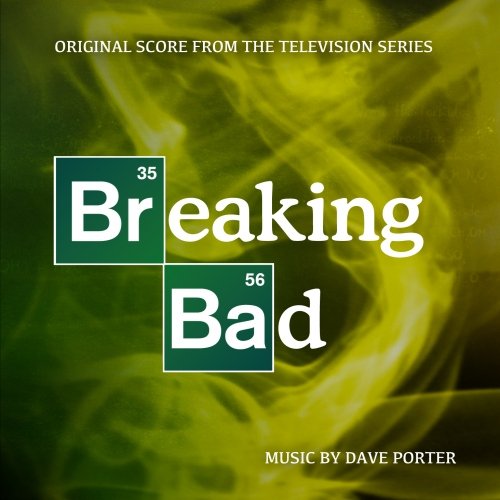
"Breaking Bad" (TV series) - Dave Porter


As it builds to its highly anticipated finale, "Breaking Bad" is widely hailed as one of the finest television series of all time.  What elevates this drama is the excellence with which every element is crafted: the acting, writing, directing and cinematography are the most obvious examples.

But don't overlook Dave Porter's masterful work scoring each and every episode.


Great scores in film and television come in two flavors: those that call attention to themselves and those that you don't often notice. Both types are equally effective in the right hands and in the right context.  John Williams' classic score for Star Wars is something anyone can hum - its grandiosity and power match the scale of an intergalactic battle between good and evil.

Showy scores like Williams' tend to get the most attention. And people also notice music when it's bad - heavy handed or repetitive or incongruous. 

But music that people don't consciously notice, even while it ties together scenes and amplifies emotion, music that would be sorely missed if it disappeared? That is the work of a very talented individual.


Dave Porter's work on "Breaking Bad" falls in this category.  Not to say that you never notice his score, because you do.  But on the whole it directs attention not to itself but keeps it on the story, where it belongs.  It never takes you out of the moment. It never hits you over the head to tell you THIS IS SCARY or THIS IS FUNNY or THIS IS SAD.  It's subtly perfect.

Because the characters have evolved so much over five seasons, Porter is always coming up with new music.  He isn't just coming up with a handful of great themes to reuse and tweak, he's constantly creating a new soundscape.

His work here is also distinctive for its lack of standard orchestral instruments. Instead, he features electronic sounds and ethnic instruments, as well as acoustic guitar and found sounds that aren't created by a musical instrument. 

And in this day of short title sequences, Porter came up with that memorable dobro and percussion theme that punctuates every cold open and primes the viewer for an hour of gut wrenching suspense.


1 - What is your favorite score for a television series and how has it influenced your work on Breaking Bad?

Dave Porter: As a whole, I'm probably more influenced by film scores than those from television, although there have been a some important exceptions.  When I was 14 years old it would have been hard to drag me away from Miami Vice on a Friday night…  Michael Mann and Jan Hammer used music in a very aggressive and overt way that hadn't happened previously on TV.  Certainly Twin Peaks is another - the way that David Lynch has always melded music and sound design has been a big influence on my own work.

(Editor's note: Once, as an icebreaker, my colleagues and I had to name our favorite TV theme songs. I said "Twin Peaks" and none of my two dozen co-workers knew the song - and we worked at a television network! Here it is in all its beautiful and mysterious glory. A TV theme would never be allowed to run this long nowadays.)  


2 - Since, sadly but inevitably, BB is ending, what will you be working on next?

DP: I'm very excited about my next project, which will be a series for Fox entitled "Wayward Pines."  It is being produced by M. Night Shyamalan, who will also direct the first episode. Chad Hodge and Donald DeLine are also executive producers, and the cast they have lined up is fantastic: Matt Dillon, Terence Howard, Melissa Leo, Juliette Lewis, and more.  It is a thriller that is expected to air next summer.


3 - When a song is used in an episode of BB, such as Jim White's "Wordmule," is it added to the sound mix before, after or during your scoring, and do you ever consult with the music supervisor about what songs get used?

DP: All of the music, additional sound effects, dialogue fixes, etc., get mixed together in the final audio mix, which is generally the last step in the creative process of a film or television episode.  Most films and tv shows have a music supervisor in addition to a composer, and that person is responsible for the licensed music that is used.  In our case, that job is handled by Thomas Golubic and his staff, who do an amazing job.

I do coordinate with Thomas (and of course Vince Gilligan and other writers/producers) about where music should be used, and if we are going to use music in a particular scene whether it should be source or score.

If we decide source (aka licensed) music is the best option, then creatively that task falls to Thomas.  On a few occasions we've been unsure whether score or source would be the best option, and we've both worked on music for a scene, in which case Vince Gilligan would make the final decision.


4 - You've been very accessible to BB fans on Reddit and Facebook, etc.  Is using social media a must for a career in music or simply something you enjoy doing? 

DP: This is an interesting question, and one that I don't think I fully know the answer to yet.  I'm not sure that being available on social media is really anything that is likely to further my career… at least I don't see it that way.  But I guess you never know -- it certainly can't hurt to have people be aware of your work.  

For me, I started doing those things because I had an inside view on a unique television show that people were eager to talk about.  In the beginning, in particular,  it was fascinating to connect with fans who were early adopters and as passionate about the show as we were.  As the show grew in popularity I used these social networks as an interesting gauge of where we were during the crazy ascent of the show into the popular series it has become.  

As my career moves on beyond Breaking Bad it will be interesting for me to see what role social media plays.


5 - How did you select which tracks to include on the soundtrack album, given more than four season's worth of material, especially since your music for the series is not just a collection of themes and stings?

DP: Selecting cues to include on my score soundtrack CD was definitely tough.  My view is that as a film/tv composer my task first and foremost is to create music that supports the film or show.  I'm never thinking about what something is going to sound like on a soundtrack record when I'm writing it.  

But of course listening to a soundtrack record is a very different experience, with different requirements and expectations.  I really wanted listening to the score soundtrack to be a cohesive experience, but this meant, for example, that some of my favorite cues didn't make it simply because they felt too short and there wasn't time or budget to rerecord them.  

Overall it was a very rewarding experience, though, and I'm really pleased to have the score soundtrack available for those fans that are interested.

6 - What was the hardest episode to score?

DP: From a purely logistical standpoint, last summer's "Dead Freight" with the train heist sequence was the most demanding.  Previously, I think the longest cue I had written for the show was around 4 minutes long.  The train heist cue lasts almost the entirety of the final act, approximately 13 minutes.  For any composer working on an extended action sequence, it is a lot of work to keep the music varied and follow all the peaks and valleys across a long stretch of time.  

From an emotional standpoint, my "Jane's Demise" cue was probably the hardest.  That was not only a very difficult scene to have to watch hundreds of times, but a very complicated series of emotions and reactions that had to be accounted for musically without necessarily commenting on the scene from a moral standpoint.  That particular cue had many incarnations before arriving at exactly the right one. 


7 - Showrunner Vince Gilligan and editor Kelley Dixon are always quick to praise your work.  Will you be on any of their podcasts this season

DP: Our official podcasts, which Vince and Kelley put out for every episode, are an amazing source of insider info on the show.  I highly recommend them for fans of the show.  I always love attending them because without fail I'm also learning all kinds of new things that I never knew.  

I have been a part of a number of them, and I'm honestly not sure if I will be a part of any this final season… they tend to be a last minute thing.  I have, though, recorded DVD commentary on a few episodes already, which are always fun as well.

I'm fighting for my soul

Long Hard Times to Come ("Justified" theme) - Gangstagrass

"There are only two types of music: good and bad."

This famous quote is usually attributed to Duke Ellington or Louis Armstrong, but occasionally to others.  What matters most is that it's true.  The songs I choose to feature on this blog all fall into my personal definition of "good" - which means anything from 1970s bubblegum pop to a country song from the 40s, a just-released alternative tune or an instrumental version of something written centuries ago.  My tastes are broad, though I do tend toward melodic songs and interesting harmony.

"Long Hard Times to Come" falls into a few very interesting categories besides "good music."  First off, it's a television theme song, a genre which encompasses a wide range of music over the last 60 years.  Funny, but it seems the best shows often have the best songs - or maybe it's a Pavlovian process whereby we associate something we hear repeatedly (the song) with something that gives us pleasure (the program).  

"Justified" is one of the best dramas on television, up there with "Breaking Bad" and "Mad Men."  Each episode starts with an compelling cold open, leading to a dramatic moment and then, satisfyingly, the THUMP... THUMP... THUMP of a bass drum that kicks off "Long Hard Times to Come." 

Besides being a theme song, LHTTC is distinct because it sounds fresh - it's a blend of bluegrass and hip hop.  Certainly a polarizing genre - some people don't like it at all.  But many more do.  If you haven't heard it, take a listen to the full version of the song and decide for yourself:


Long Hard Times to Come


After the jump, Rench, the singer/producer/songwriter behind Gangstagrass, answers seven questions about "LHTTC."