Showing posts with label composer. Show all posts

Though the Road Buckles Under

 STAY WITH ME - Jerome Moross (1913-1983)


"Stay with Me" has been in the news lately. No, I don't mean the song by Sam Smith that inadvertently rips off Tom Petty's "Won't Back Down," but the song of the same title that Bob Dylan sings on his new album, "Shadows in the Night."  This "Stay with Me" was also released as a single and Dylan closed many of his concerts last year with it.  

When the most important songwriter of the last fifty years puts out an album of standards, the songs he selects receive a rarified stamp of approval. While some of the tracks on "Shadows" are quite well known (Irving Berlin's "What'll I Do" and Rodgers and Hammerstein's "Some Enchanted Evening"), others are underappreciated gems. 

"Stay with Me" falls into the latter category.  A spiritual song that's less about religion and more about human hope and fear, it brings to mind "You'll Never Walk Alone" and "Lucky Old Sun," standards which Johnny Cash sang on his American Recording series. 

Like Cash's covers, Dylan's version of "Stay with Me" is stripped down to an elegant arrangement, sans any orchestration, and makes evocative use of the miles on the singer's voice.  Seldom has Dylan sounded so appealingly vulnerable.

So where did this song come from?  Like all the other songs on "Shadows in the Night," it was sung by Frank Sinatra.  In June, 1965, a month before Dylan's "Like a Rolling Stone" turned pop music on its ear, Sinatra released an album that included "Stay with Me," which he had recorded as the theme song for "The Cardinal" in 1963.
 
"The Cardinal," directed by Otto Preminger, was awarded the Golden Globe for Best Picture. It tells the story of an American priest who overcomes various crises as he rises in the Church hierarchy.  

The film features an outstanding score by Jerome Moss, who also composed the music for the theme song; the song's lyrics were written by Carolyn Leigh ("Witchcraft," "The Best is Yet to Come").
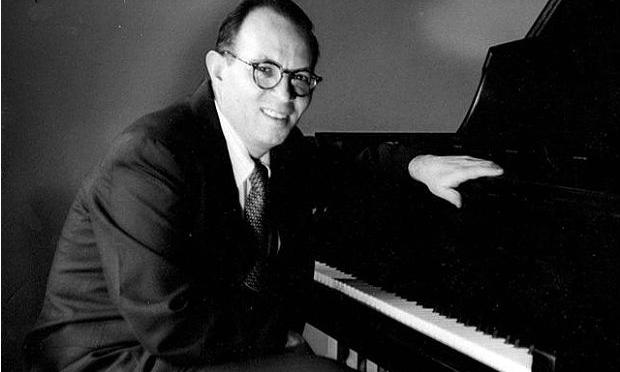
 
 
Moross, an accomplished composer, is best known for his scores for "The Big Country" and "Wagon Train," but he was also an innovator who wrote for Broadway and classical ensembles.   

Moross's daughter, Susanna Moross Tarjan, put together a fantastic site for her father's centennial.  She took the time to answer my questions about "Stay with Me" and I'm happy to share her thoughts with you.

1 - What did your father think of rock singers/songwriters like Bob Dylan?
 
Susanna Moross Tarjan:  I have no idea what my father thought about Bob Dylan, or even if he did.  Remember, he died in 1983 and had been quite sick for some time.  I'm not sure how aware he was of all that.  However, he did not like "Rock and Roll."  He also didn't like Moog synthesizers, which were popular at that time.  I think he'd be amazed at what synthesizers sound like today, and MP3.  He didn't even know about CDs, which changed everything for me as far as getting his music "out there."
 
2 - What do you think of Dylan's version of "Stay with Me"?
 
SMT:  I find Dylan's version of "Stay With Me" very moving.  The song clearly arouses some spiritual feelings in him which he conveys.  I think it has a different quality than any other song on the album.


3 - As far as I can tell, "Stay with Me" is the only song your father wrote with Songwriting Hall of Fame lyricist Carolyn Leigh. What do you know about that collaboration?

SMT:  I don't know how that came about.  I would guess that it came via the film company.  The recording came about because Frank Sinatra was a friend of hers and she asked him to do it as a favor to her.  I'm so glad he did.  It's such a beautiful recording.  For people who haven't heard it, it's on YouTube.


4 - "The Cardinal" was unusual in that your father, who composed the score for the film in addition to co-writing the theme song, went on location with the production from start to finish.  Was "Stay With Me" part of that journey?
 
SMT:  "Stay With Me" came after the film and score were done.  It was unusual for the composer to go along with the production company.  My father acted as the traveling music department.  But he loved it.  He had a lot of interesting experiences, including trying to find "Horst-Wessel" songs in Vienna that he needed for a Nazi marching scene.  Of course no one had ever heard of them but finally his driver helped him.  He and my mother had a great expenses paid trip to Europe and she had never been before.  This was long before the days of deregulation and cheap fares.


5 - Did your father ever play "Stay with Me," or sing it at home, or talk about it in his later years, or was it simply one of many things he composed before moving on to other projects?
 
(see answer to #6)
 
6 - What did your father think of Frank Sinatra's original version of "Stay with Me"?
 
SMT:  I wasn't living at home then so I don't know how often he played it.  He certainly liked the song and I know he loved Frank Sinatra's version.  However, like with other works, he moved on to other projects.
 
Susanna and Jerome Moss @ 1944
 
7 - Your father wrote ballets, a symphony, film scores, Broadway musicals and more. Much of his work is longer form and instrumental. Is there anything in "Stay with Me" that you feel is reflective of his work as a whole or is it atypical?
 
SMT:  "Stay With Me" is reflective of his work in that it is a beautiful melody.  He never gave up writing tonal music even though it wasn't in fashion during his prime years.  He believed there was always another tune to be written.



Musical Chemistry

"Breaking Bad" (TV series) - Dave Porter


As it builds to its highly anticipated finale, "Breaking Bad" is widely hailed as one of the finest television series of all time.  What elevates this drama is the excellence with which every element is crafted: the acting, writing, directing and cinematography are the most obvious examples.

But don't overlook Dave Porter's masterful work scoring each and every episode.


Great scores in film and television come in two flavors: those that call attention to themselves and those that you don't often notice. Both types are equally effective in the right hands and in the right context.  John Williams' classic score for Star Wars is something anyone can hum - its grandiosity and power match the scale of an intergalactic battle between good and evil.

Showy scores like Williams' tend to get the most attention. And people also notice music when it's bad - heavy handed or repetitive or incongruous. 

But music that people don't consciously notice, even while it ties together scenes and amplifies emotion, music that would be sorely missed if it disappeared? That is the work of a very talented individual.


Dave Porter's work on "Breaking Bad" falls in this category.  Not to say that you never notice his score, because you do.  But on the whole it directs attention not to itself but keeps it on the story, where it belongs.  It never takes you out of the moment. It never hits you over the head to tell you THIS IS SCARY or THIS IS FUNNY or THIS IS SAD.  It's subtly perfect.

Because the characters have evolved so much over five seasons, Porter is always coming up with new music.  He isn't just coming up with a handful of great themes to reuse and tweak, he's constantly creating a new soundscape.

His work here is also distinctive for its lack of standard orchestral instruments. Instead, he features electronic sounds and ethnic instruments, as well as acoustic guitar and found sounds that aren't created by a musical instrument. 

And in this day of short title sequences, Porter came up with that memorable dobro and percussion theme that punctuates every cold open and primes the viewer for an hour of gut wrenching suspense.


1 - What is your favorite score for a television series and how has it influenced your work on Breaking Bad?

Dave Porter: As a whole, I'm probably more influenced by film scores than those from television, although there have been a some important exceptions.  When I was 14 years old it would have been hard to drag me away from Miami Vice on a Friday night…  Michael Mann and Jan Hammer used music in a very aggressive and overt way that hadn't happened previously on TV.  Certainly Twin Peaks is another - the way that David Lynch has always melded music and sound design has been a big influence on my own work.

(Editor's note: Once, as an icebreaker, my colleagues and I had to name our favorite TV theme songs. I said "Twin Peaks" and none of my two dozen co-workers knew the song - and we worked at a television network! Here it is in all its beautiful and mysterious glory. A TV theme would never be allowed to run this long nowadays.)  


2 - Since, sadly but inevitably, BB is ending, what will you be working on next?

DP: I'm very excited about my next project, which will be a series for Fox entitled "Wayward Pines."  It is being produced by M. Night Shyamalan, who will also direct the first episode. Chad Hodge and Donald DeLine are also executive producers, and the cast they have lined up is fantastic: Matt Dillon, Terence Howard, Melissa Leo, Juliette Lewis, and more.  It is a thriller that is expected to air next summer.


3 - When a song is used in an episode of BB, such as Jim White's "Wordmule," is it added to the sound mix before, after or during your scoring, and do you ever consult with the music supervisor about what songs get used?

DP: All of the music, additional sound effects, dialogue fixes, etc., get mixed together in the final audio mix, which is generally the last step in the creative process of a film or television episode.  Most films and tv shows have a music supervisor in addition to a composer, and that person is responsible for the licensed music that is used.  In our case, that job is handled by Thomas Golubic and his staff, who do an amazing job.

I do coordinate with Thomas (and of course Vince Gilligan and other writers/producers) about where music should be used, and if we are going to use music in a particular scene whether it should be source or score.

If we decide source (aka licensed) music is the best option, then creatively that task falls to Thomas.  On a few occasions we've been unsure whether score or source would be the best option, and we've both worked on music for a scene, in which case Vince Gilligan would make the final decision.


4 - You've been very accessible to BB fans on Reddit and Facebook, etc.  Is using social media a must for a career in music or simply something you enjoy doing? 

DP: This is an interesting question, and one that I don't think I fully know the answer to yet.  I'm not sure that being available on social media is really anything that is likely to further my career… at least I don't see it that way.  But I guess you never know -- it certainly can't hurt to have people be aware of your work.  

For me, I started doing those things because I had an inside view on a unique television show that people were eager to talk about.  In the beginning, in particular,  it was fascinating to connect with fans who were early adopters and as passionate about the show as we were.  As the show grew in popularity I used these social networks as an interesting gauge of where we were during the crazy ascent of the show into the popular series it has become.  

As my career moves on beyond Breaking Bad it will be interesting for me to see what role social media plays.


5 - How did you select which tracks to include on the soundtrack album, given more than four season's worth of material, especially since your music for the series is not just a collection of themes and stings?

DP: Selecting cues to include on my score soundtrack CD was definitely tough.  My view is that as a film/tv composer my task first and foremost is to create music that supports the film or show.  I'm never thinking about what something is going to sound like on a soundtrack record when I'm writing it.  

But of course listening to a soundtrack record is a very different experience, with different requirements and expectations.  I really wanted listening to the score soundtrack to be a cohesive experience, but this meant, for example, that some of my favorite cues didn't make it simply because they felt too short and there wasn't time or budget to rerecord them.  

Overall it was a very rewarding experience, though, and I'm really pleased to have the score soundtrack available for those fans that are interested.

6 - What was the hardest episode to score?

DP: From a purely logistical standpoint, last summer's "Dead Freight" with the train heist sequence was the most demanding.  Previously, I think the longest cue I had written for the show was around 4 minutes long.  The train heist cue lasts almost the entirety of the final act, approximately 13 minutes.  For any composer working on an extended action sequence, it is a lot of work to keep the music varied and follow all the peaks and valleys across a long stretch of time.  

From an emotional standpoint, my "Jane's Demise" cue was probably the hardest.  That was not only a very difficult scene to have to watch hundreds of times, but a very complicated series of emotions and reactions that had to be accounted for musically without necessarily commenting on the scene from a moral standpoint.  That particular cue had many incarnations before arriving at exactly the right one. 


7 - Showrunner Vince Gilligan and editor Kelley Dixon are always quick to praise your work.  Will you be on any of their podcasts this season

DP: Our official podcasts, which Vince and Kelley put out for every episode, are an amazing source of insider info on the show.  I highly recommend them for fans of the show.  I always love attending them because without fail I'm also learning all kinds of new things that I never knew.  

I have been a part of a number of them, and I'm honestly not sure if I will be a part of any this final season… they tend to be a last minute thing.  I have, though, recorded DVD commentary on a few episodes already, which are always fun as well.